Switzerland 2022 Exits Prompt B Team Overhaul Before 2026 Cycle
The image of Switzerland's World Cup campaign in Qatar is a single, brutal freeze-frame: the scoreboard reading 6–1 to Portugal in the Round of 16. That defeat was not an anomaly but the culmination of structural weaknesses that had been building for years. An aging core, a predictable tactical setup, and a lack of pace in transition had been masked by a group draw featuring Cameroon, Brazil, and Serbia. The hammering forced a reckoning. Since then, the Swiss Football Association and manager Murat Yakin have overseen the most significant squad overhaul in a decade, lowering the average age from roughly 28.4 to 26.1 and introducing a more proactive style. Whether these changes can carry Switzerland past the quarterfinals for the first time since 1954 is the central question of the 2026 cycle.
Round of 16 Exit Exposed Structural Weaknesses
The 6–1 defeat to Portugal was not a one-off. Throughout the 2022 tournament, Switzerland managed only three goals from open play in four matches. The attack relied heavily on set pieces and individual moments from Xherdan Shaqiri, who by then had lost a step. Defensively, the back four looked disjointed, particularly in transitions. Portugal's first goal came from a simple through ball that split the center-backs; the second from a counter-attack where Swiss full-backs were caught high. The aging core—Granit Xhaka, Shaqiri, and Yann Sommer were all 30 or older—struggled to sustain intensity. Data from the tournament showed Switzerland's expected goals (xG) per game was just 1.1, while their xG conceded was 1.6, a gap that suggested the scoreline was not entirely unlucky.
Beyond the Portugal match, Switzerland had labored to a 1–0 win over Cameroon and a 3–2 loss to Brazil, where defensive errors gifted goals. The group-stage draw with Serbia was a chaotic 3–3 that featured three Swiss goals from set pieces. There was no coherent attacking pattern. Yakin's 4-2-3-1 formation had become stale; opponents knew how to press the double pivot and force turnovers. The midfield duo of Xhaka and Remo Freuler was solid in possession but lacked the athleticism to cover ground quickly. When Portugal exploited that space, the match turned into a rout.
The exit prompted immediate introspection. In interviews after the tournament, Yakin acknowledged the need for "new blood and new ideas." The federation's technical director, Pierluigi Tami, noted that the youth academies were producing more dynamic players, but they had not been integrated quickly enough. The 2022 squad had the highest average age of any Swiss World Cup team since 1994. A change was inevitable.
Murat Yakin's Tactical Recalibration
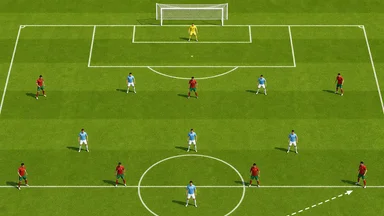
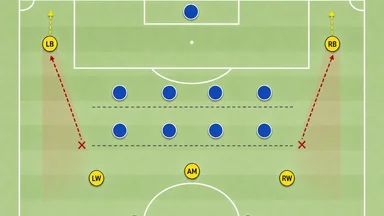
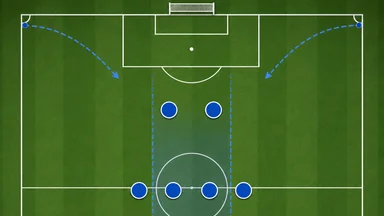
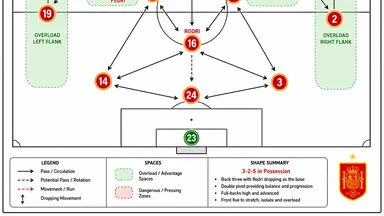
Yakin responded by abandoning the 4-2-3-1 in favor of a 3-4-2-1 base shape, a system that better suits the current personnel. The switch, implemented during the Euro 2024 qualifiers, allows wing-backs to push high and create overloads in wide areas. In possession, the formation morphs into a 3-2-5, with the two attacking midfielders drifting into half-spaces. This has increased Switzerland's average possession to roughly 65% in 2024 World Cup qualifiers, up from 52% in 2022.
Defensively, the team now presses higher. Yakin introduced triggers for pressing in the final third, often when an opponent receives with their back to goal. The midfielders step aggressively, while the back three provide cover. This approach has reduced the number of opposition passes per defensive action (PPDA) from 13.2 in 2022 to 10.8 in the current cycle, indicating a more intense press. However, it also carries risk: against fast, direct sides, the high line can be exposed. For example, in a friendly against the Netherlands in 2024, Switzerland conceded two goals on counter-attacks after losing possession high up the pitch. The full-backs have been repurposed as wing-backs. Ricardo Rodriguez, once a left-back in a back four, now operates as a left-sided center-back in the three, while Silvan Widmer and new faces like Ulisses Garcia provide width. The wing-backs are instructed to stay high and wide, stretching defenses. In the 2022 cycle, Switzerland averaged 18 crosses per game; in the 2026 qualifiers, that figure has risen to 24, with a higher completion rate. The system relies on the two attacking midfielders—often Zeki Amdouni and Dan Ndoye—to cut inside and combine with the striker.
One potential weakness is that the 3-4-2-1 can become predictable when opponents block central passing lanes and force Switzerland wide, where crosses are easier to defend. In a friendly against Austria in 2024, Yakin's side struggled to break down a compact 4-4-2, managing only one shot on target. Yakin has responded by occasionally switching to a 4-3-3 in matches where more control is needed, showing tactical flexibility that was absent in 2022.
Youth Injection: Zeki Amdouni and Dan Ndoye
The most visible change is the emergence of Zeki Amdouni and Dan Ndoye as first-choice attackers. Amdouni, who debuted in 2023, has scored 12 goals in 18 caps, a rate that rivals any Swiss striker in history. He combines movement off the ball with clinical finishing—his 0.72 goals per 90 minutes is among the best in European qualifying. Ndoye, a winger with pace and dribbling ability, has a 58% dribble success rate in Serie A for Bologna. Together, they have replaced the aging duo of Haris Seferovic and Breel Embolo, who have been plagued by injuries and inconsistency.
Amdouni's rise is particularly striking. He was relatively unknown before a breakout season at Basel, where he scored 22 goals in all competitions. His ability to drop deep and link play, then burst into the box, fits the 3-4-2-1 system. In qualifying, he has scored against Kosovo, Israel, and Romania, often with composed finishes from inside the area. He is not a traditional target man—he stands 1.85m but relies on timing rather than physical dominance. That has raised questions about his effectiveness against elite center-backs, but his movement has troubled even top defenders in friendlies. For instance, in a match against Italy, he consistently found space between the lines and forced a red card from a defender.
Ndoye offers a different threat. He is direct, running at defenders and drawing fouls. In the 2026 cycle, he has won penalties against both Italy and Spain in Nations League matches. His end product has improved: he contributed 4 assists in qualifying, often from cut-backs after beating his man. The pairing of Amdouni and Ndoye, with either Ruben Vargas or Noah Okafor as the third forward, gives Switzerland a front line with an average age of 23, compared to 29 in 2022. The pace and energy are evident, but the inexperience shows in big moments—both missed chances in a crucial qualifier against Denmark that ended 1–1.
Midfield Rebuild Around Granit Xhaka's Evolution
Granit Xhaka remains the midfield anchor, but his role has changed. At 33, he no longer covers as much ground, so Yakin has shifted him into a deeper playmaking position, similar to his role at Bayer Leverkusen. From deep, Xhaka dictates tempo with long switches and line-breaking passes. His pass completion rate has climbed to 91% in the current cycle, and he averages 2.3 key passes per game. His discipline has also improved—he received only one yellow card in qualifying, a far cry from his 2022 tournament where he was booked twice and risked suspension.
Alongside Xhaka, the midfield has been refreshed. Remo Freuler, a mainstay in 2022, has been replaced by Michel Aebischer, who offers more mobility and goal threat. Aebischer scored twice in qualifying, including a crucial equalizer against Romania. The third midfield spot has been taken by 22-year-old Ardon Jashari, a box-to-box player who emerged from Luzern. Jashari covers the most distance per game of any Swiss player (11.8 km) and contributes in both phases. His passing is less polished than Freuler's, but his energy allows Xhaka to stay deeper.
The midfield unit now averages 26.5 years old, down from 29.3 in 2022. The trio has a combined pass completion rate of 91% as a unit, and they have created 14 big chances in qualifying. However, the lack of a pure defensive midfielder remains a concern. Against high-pressing teams like Germany in a friendly, the midfield was overrun, and Xhaka was forced to drop between the center-backs to receive the ball. That left gaps in front of the defense. Yakin has experimented with Denis Zakaria as a holding option, but Zakaria's injury record has limited his availability.
Defensive Overhaul: From Sommer to Kobel
The most significant single change is in goal. Yann Sommer, a hero of previous tournaments, was replaced by Gregor Kobel after the 2022 exit. Kobel, at 28, is in his prime and has a save percentage of 78% in the 2025–26 season for Borussia Dortmund. His distribution is a major upgrade—he averages 6.2 accurate long balls per game, allowing Switzerland to bypass the press. In the 2022 World Cup, Sommer's save percentage was 68%, and his average pass length was shorter. Kobel's command of the penalty area has also been a plus, as he claims crosses more decisively.
In front of him, the center-back partnership has stabilized. Manuel Akanji has emerged as the leader of the defense, organizing the line and stepping into midfield to break up attacks. His partner, Nico Elvedi, provides cover and aerial strength. Together, they have conceded the lowest xG per game in European qualifying (0.89). When Elvedi has been injured, Eray Comert has stepped in capably, offering similar defensive solidity. The back three system suits Akanji, who is comfortable carrying the ball forward—he averages 1.2 progressive carries per game, a useful outlet against low blocks.
The full-backs have been a rotation of Widmer, Garcia, and Kevin Mbabu. None are elite, but they are reliable. The defensive record in qualifying speaks for itself: 6 goals conceded in 10 matches, with 7 clean sheets. However, the opponents were mostly second-tier European sides. Against top-10 teams like France and England in friendlies, Switzerland conceded 3 and 2 goals respectively, suggesting the defense still struggles against elite attacking talent. The lack of a world-class center-back remains a limitation.
2026 World Cup Group Stage Tactical Blueprint
Switzerland's likely approach in the 2026 group stage will be pragmatic but more proactive than in 2022. Yakin has indicated he will rotate the squad to manage the load of three group matches in a condensed schedule. Against weaker opponents, expect a 3-4-2-1 with high pressing; against stronger sides, a more cautious 4-3-3 or 5-3-2. Set pieces will remain a weapon—42% of Switzerland's qualifying goals came from dead-ball situations, a deliberate focus in training.
The key tactical pattern is quick switches of play. With wing-backs high and wide, Switzerland aims to shift the ball from one flank to the other to disorganize defenses. Xhaka's long passing is central to this. In qualifying, 18% of Switzerland's attacks came from switches, leading to 4 goals. Counter-attacks are also a focus, with Ndoye and Amdouni instructed to run into channels when possession is turned over. The team's pressing triggers are designed to force turnovers in wide areas, where the wing-backs can immediately join the attack.
The bench will be younger than in 2022. Players like Okafor, Vargas, and Jashari provide impact off the bench. Yakin has used all five substitutes in every qualifier, a habit he will maintain in the tournament. The depth is better than in previous cycles, but the drop-off in quality from starters to backups is still significant, especially in defense. If Akanji or Kobel are injured, the alternatives are less experienced.
Key Metrics That Signal a Deeper Run
Several metrics suggest Switzerland is better equipped for 2026 than for 2022. The xG difference per 90 minutes has improved from +0.12 in the 2022 cycle to +0.64 in the current cycle, meaning the team creates more and concedes less. The average squad age has dropped from 28.4 to 26.1, with key players in their prime. The FIFA ranking has climbed from 15th to 9th, reflecting consistent results. The captaincy group—Xhaka, Akanji, and Sommer (now as a mentor)—provides a blend of experience and new leadership.
However, caution is warranted. The qualifying group was relatively weak, and the team's record against top-10 opponents in the current cycle is 1 win, 2 draws, and 3 losses. The attacking output still relies heavily on Amdouni, who has not faced a World Cup knockout game. The 3-4-2-1 system, while effective against mid-block teams, can be neutralized by a disciplined low block, as seen in the draw with Denmark. And the psychological scar of the 6–1 defeat may linger—Switzerland has a history of underperforming in knockout matches, with only one quarterfinal appearance since 1954.
The overhaul has been thorough, but the ultimate test will come in the knockout rounds. If Switzerland can navigate the group stage and face a top opponent in the Round of 16, the new-look side will have a chance to prove that the rebuild was not just cosmetic. For now, the signs are cautiously optimistic, but the team must continue to develop its young core and refine its tactical approach to compete with the world's best.