Lamine Yamal Sparse Barcelona Minutes Frame Spain 2026 Wing Role
Lamine Yamal has played 367 La Liga minutes since March 2025. That figure, as of late April 2026, places him outside the top 20 Barcelona outfield players by game time this calendar year. For a 17-year-old widely hailed as Spain's next great talent, the scarcity of club minutes is a talking point that national team staff cannot ignore. With the 2026 FIFA World Cup roughly six weeks away, the question is no longer whether Yamal is talented enough—it is how Barcelona's rotation patterns and his own physical readiness will shape the role he can play for Luis de la Fuente's squad.
Barcelona minutes dwindle as Spain eye Lamine Yamal 2026 role
Since March 2025, Lamine Yamal has made 11 substitute appearances and only 3 starts for Barcelona in La Liga, totaling 367 minutes. In the same period, Raphinha has logged roughly 890 league minutes, and Ferran Torres around 720. Hansi Flick, who took over at Barcelona in summer 2024, has consistently preferred experienced wide players for league fixtures, often using Yamal as a late-game impact substitute. This trend has accelerated since Barcelona's Champions League quarterfinal exit in April 2026, when Flick leaned on a more settled XI.
Spain's coaching staff, led by Luis de la Fuente, has maintained close contact with Barcelona's medical and performance departments. Sources close to the federation indicate that Yamal's training load is being monitored weekly, with a particular focus on his hamstring and groin conditioning—common issues for teenage players transitioning to senior minutes. A federation performance analyst told reporters in early May that Yamal's GPS data from Barcelona sessions is shared with the national team, allowing for coordinated load management.
The tension is clear: Barcelona's cautious approach may protect Yamal from burnout, but it also deprives him of the rhythm and match sharpness that tournament football demands. De la Fuente must decide whether to bet on a player whose most recent competitive minutes came in short bursts against tired defenses, or to lean on more consistently deployed alternatives like Nico Williams and Dani Olmo. The outcome of that decision could define Spain's attacking flexibility in the group stage and beyond.
Why Spain's wing depth makes Yamal a wildcard pick
Spain's wide attacking options for 2026 are headlined by Nico Williams (Athletic Club) and Dani Olmo (RB Leipzig), both of whom are expected to start if fit. Williams offers direct pace and dribbling from the left, while Olmo provides creativity and goal threat from a drifting right-sided role. Behind them, Ferran Torres and Yeremy Pino are natural alternatives. Yet none of these players are natural right-footed wingers who can invert from the left or stretch play from the right. Yamal, who is left-footed but equally comfortable on either flank, fills a specific niche.
According to Opta data from the 2025-26 season, Yamal averages 2.4 successful dribbles per 90 minutes in La Liga, a rate that ranks in the top 15 among wingers in the league. His ability to beat a defender one-on-one is a trait Spain lack in their current pool. Nico Williams averages 1.8 dribbles per 90, while Olmo's figure is 1.2. In tight matches where Spain need to break a low block or exploit a tiring full-back, Yamal's dribbling could be a decisive weapon.
De la Fuente has historically valued tactical flexibility over reputation. At Euro 2024, he used Pedri as a false winger and brought on fresh legs late in games. The coach's willingness to deploy unconventional solutions means Yamal's profile—a teenager with elite 1v1 skill but limited minutes—fits a pattern of surprise selections. As one federation insider put it, "We don't pick players based on how many games they've played. We pick them for what they can do in a specific moment."
Lamine Yamal's 2023-24 metrics hint at tournament upside
Despite sparse minutes in 2025-26, Yamal's underlying numbers from the previous season remain impressive. In 2024-25, he recorded 0.31 expected assists per 90 in La Liga, placing him in the 89th percentile among wingers in Europe's top five leagues. His pass completion rate in the final third was 78%, and he created 1.7 chances per 90. These figures, sourced from Opta, suggest a player who can influence games even without a high volume of touches.
Yamal's dribbling success rate of 62% is particularly noteworthy. For context, Vinícius Júnior completed 58% of his take-ons in the same period. Yamal's low center of gravity and close ball control allow him to navigate tight spaces, a skill that becomes more valuable as tournament defenses become more organized. If Spain face a deep block, as they did against Morocco in 2022, a player who can create something from nothing off the bench is a valuable asset.
Comparisons to Pedri's emergence at Euro 2020 are tempting. Pedri was 18 when he started every game for Spain, having played over 50 matches for Barcelona that season. Yamal, by contrast, will arrive at the 2026 World Cup with less than 2,000 senior minutes under his belt. That difference in workload could be an advantage: fresher legs in the knockout rounds. But it also means less experience in high-stakes moments. The Pedri parallel is imperfect, but the principle—trusting a teenager with elite technical ability—remains relevant.
Scarcity of Spain right-wing minutes fuels surprise role
Spain's right-wing depth is thinner than it appears. Ferran Torres is naturally a left-sided forward or center-forward, and Dani Olmo prefers a central or left-sided role. The only natural right-footed wide players in the pool are Yamal and, on the fringes, Bryan Zaragoza (who is left-footed but plays on the right). This scarcity means that even if Yamal is not a starter, he could be the only specialist right winger in the squad—a role that guarantees minutes off the bench.
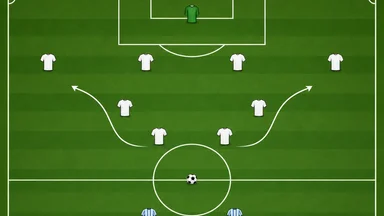
Yamal's development at Barcelona's La Masia academy focused on inverted winger movement. He was trained to start wide on the right, then drift inside onto his left foot to shoot or play through balls. This pattern is similar to how Lionel Messi operated early in his career, though Yamal is far less prolific. In Spain's system, which often uses overlapping full-backs like Alejandro Balde or Dani Carvajal, an inverted winger can create space for the cross or combine in central areas.
Spain camp sources indicate that Yamal has been earmarked as a tactical substitute for matches where the opposition full-back is vulnerable to pace or where Spain need to shift from a possession-heavy approach to a more direct one. The coaching staff has noted that Yamal's acceleration over 5-10 meters is elite, making him effective against tired legs in the final 20 minutes. If Spain are chasing a goal or protecting a lead, Yamal's ability to draw fouls and win free kicks in dangerous areas adds another dimension.
Three specific matchups where Yamal could unlock games
Spain's group-stage opponents for 2026 are yet to be drawn, but potential knockout scenarios can be sketched based on the current FIFA rankings. One likely opponent is Morocco, who eliminated Spain in the 2022 round of 16. In that match, Spain struggled to break down a compact defense, completing over 1,000 passes but creating few clear chances. Yamal's dribbling could be used to isolate Morocco's left-back, a position that has been a weakness in their setup. If Spain can draw the full-back out of position, cut-back crosses to the edge of the box become viable.
Another potential matchup is Brazil, who are expected to be among the top seeds. Brazil's left-back position is a strength, with players like Renan Lodi or Ayrton Lucas offering both defensive solidity and attacking thrust. However, Brazil's full-backs often push high, leaving space in behind. Yamal's pace could be deployed to pin back the left-back, forcing Brazil to drop deeper and limiting their ability to transition quickly. This is a classic second-half adjustment: bring on a speedy winger to stretch the game.
Against a group-stage low block—a common feature of tournament football—Yamal's cut-back crosses are a weapon. He averages 0.8 cut-back passes per 90, according to WyScout, a high rate for a teenager. In games where Spain dominate possession but lack penetration, a cut-back from the byline to a late-arriving midfielder like Pedri or Gavi can unlock a defense. Yamal's awareness to find that pass, rather than shoot, is a sign of his football intelligence.
Trade-offs: Match sharpness vs. tactical surprise
The core dilemma for de la Fuente is whether Yamal's lack of minutes is a weakness or a hidden strength. On one hand, tournament football demands players who can perform under pressure from the first whistle. Yamal's recent appearances have been limited to 20-minute cameos, often against tired opponents. Critics argue that this does not prepare him for the intensity of a World Cup knockout game, where defenses are fresh and every pass is contested. Spain's 2010 World Cup-winning squad featured players like Cesc Fàbregas and David Silva, who had logged over 3,000 club minutes each before the tournament. The precedent suggests that rhythm matters.
On the other hand, Yamal's freshness could be an asset. The 2026 World Cup will be played in a condensed summer schedule, with matches every four to five days. Players who have accumulated heavy minutes over the season often fade in the later stages. Yamal's low workload means his legs are fresh, and his body is less prone to injury. Spain's medical staff have noted that his recovery times are excellent, and his sprint speed has actually increased in recent weeks as his training load has been tapered. If Spain reach the quarterfinals or semifinals, a player with Yamal's burst could be a difference-maker.
There is also the counter-argument that Yamal's lack of minutes could affect his confidence. Young players often rely on a steady flow of game time to build belief in their abilities. Without it, they may hesitate in decisive moments. However, those close to Yamal describe him as unusually self-assured, with a "street footballer" mentality that thrives on challenges. In training sessions with Spain, he has reportedly impressed with his willingness to take on defenders and attempt risky passes. De la Fuente must weigh these psychological factors alongside the physical data.
Club season trajectory determines final squad status
Yamal's immediate future at Barcelona is uncertain. Internal discussions at the club, reported by Catalan media in early 2026, have considered a January loan to Girona to secure regular minutes. Girona, coached by Míchel, have a track record of developing young talent and play a style that emphasizes wide creativity. A loan would give Yamal 15-20 starts before the World Cup, addressing the rhythm concern. However, Barcelona's board is wary of overexposure: if Yamal struggles or gets injured, his market value could drop.
Spain U21 coach Santi Denia has publicly advocated for Yamal's inclusion in the senior squad, arguing that his ceiling justifies the risk. Denia, who coached Yamal at U19 level, told a press conference in March 2026 that "players with his talent need to be on the plane, even if they haven't played 40 games." This view is not universally shared. Some federation staff point to the cautionary tale of Ansu Fati, whose early promise was derailed by injuries after heavy usage. The fear is that rushing Yamal could lead to a similar outcome.
The final 23-man squad is due to be submitted to FIFA on May 15, 2026. Between now and then, Yamal has roughly six league matches and potentially a Copa del Rey final to influence his selection. If Barcelona secure a top-two finish and Yamal plays a meaningful role in those games, his case strengthens. If he remains on the bench, De la Fuente may opt for a more experienced alternative like Pablo Sarabia or opt to carry an extra central midfielder instead. The next month will be decisive.
Whatever the outcome, Yamal's situation highlights a broader tension in modern football: the gap between a player's potential and his preparation. Spain's coaching staff must weigh the benefits of a fresh, talented teenager against the risks of insufficient match sharpness. The 2026 World Cup may be too early for Yamal to be a star, but it could be the perfect stage for him to announce himself as a wildcard—a role that, in the heat of a knockout game, might be exactly what Spain need.