Alejandro Garnacho's Unconventional Winger Role Shapes Argentina 2026 Plan
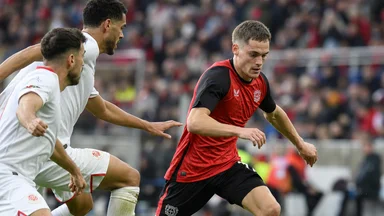
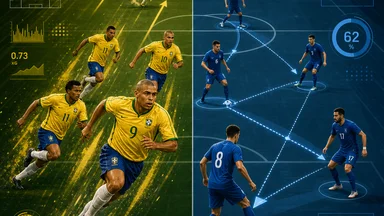
When Lionel Scaloni named his squad for the March 2025 CONMEBOL qualifiers, Alejandro Garnacho's inclusion was no surprise. The Manchester United winger had already amassed 18 caps, but his role remained unsettled. Left-footed yet often deployed on the right, Garnacho drifts inside with an aggression that recalls a young Cristiano Ronaldo more than any recent Argentina wide man. With the 2026 World Cup less than a year away, the question is not whether Garnacho will travel to North America—it's how Scaloni will deploy a player who fits no obvious template in Argentina's tactical history.
Garnacho's Unorthodox Profile Challenges Argentina's Winger Tradition
Argentina's most successful wingers have tended to be classical creators. Ángel Di María, the hero of the 2022 final, combined elite crossing with tireless defensive work. Nicolás González offered direct running and aerial threat. Both provided width. Garnacho does not. In the 2024–25 season, his crossing volume per 90 minutes was roughly half of Di María's during the 2022 World Cup cycle. Instead, Garnacho relies on explosive dribbles from the right flank, cutting onto his left foot for shots or cut-backs into the box.
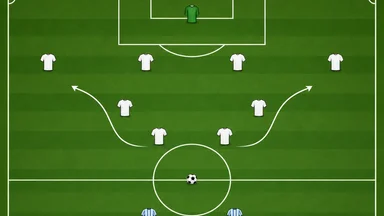
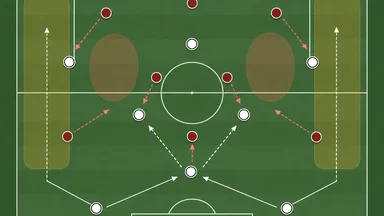
This central drift creates a problem. Argentina's attack already funnels through Lionel Messi, who operates as a roaming playmaker from the right half-space. When Garnacho occupies that same zone, the pitch narrows. Defenders can compress space, and the full-backs—Nahuel Molina or Gonzalo Montiel—are left to provide width alone. The result, in several qualifiers, has been a congested right side that stalls possession.
Defensively, Garnacho's work rate remains inconsistent. Scaloni's press relies on coordinated triggers, and Garnacho has occasionally failed to track overlapping full-backs. In the 1–0 loss to Uruguay in November 2025, he was substituted at halftime after allowing multiple crosses from his flank. The raw athleticism is there—his recovery speed is elite—but the positional discipline lags behind Di María's 2022 standard.
Why Scaloni's System Needs a New Winger Archetype
The tactical context has shifted since 2022. Messi, now 38, covers less ground. His average distance covered per game in the 2025–26 season dropped to around 7.5 km, well below his peak. Argentina compensate by having Julian Alvarez and Lautaro Martinez occupy central spaces, dragging center-backs and creating half-space channels. But this narrows the attack further. The full-backs push high, and the wingers must stretch the pitch horizontally.
Di María did this instinctively. Garnacho does not. When he starts wide, he often checks inside before receiving, inviting pressure. In the 2025 qualifier against Brazil, he completed only three of eight dribbles, all from central positions. The Brazilian double-team—full-back Danilo and midfielder Joelinton—forced him into turnovers repeatedly. Argentina's goal came after Garnacho was substituted, when Enzo Fernández found Alvarez in the left channel.
Scaloni has experimented with alternatives. Nico González offers more direct width, while Paulo Dybala can drop into midfield. But neither provides Garnacho's explosive threat in transition. The 2026 squad will likely carry four wingers, and Garnacho's unique profile means he is not easily replaced. The question is whether the system bends to him or he bends to the system.
2026 Qualifiers Data: Garnacho's Output vs. Predecessors
Looking at the numbers from the 2025–26 CONMEBOL qualifiers, Garnacho's output is distinctive. His expected goals per 90 minutes from open play sits at roughly 0.22, comparable to Di María's 0.24 in the 2022 cycle. But his creative numbers are lower: only 1.3 key passes per 90, against Di María's 2.1. Garnacho shoots more—around 3.4 attempts per 90—but many come from tight angles after cutting inside.
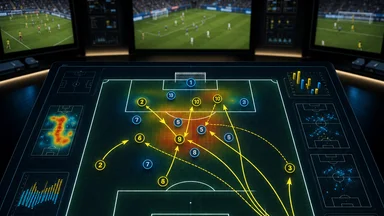
His dribble success rate of 58% is elite, but the geography matters. When starting on the right, roughly 70% of his dribbles end in the left half-space or central zone. That means he often runs into the same areas occupied by Alvarez or Messi. Compare that to Di María, who delivered 65% of his crosses from the right byline. Garnacho's crossing rate from that zone is under 20%.
In the 2025 qualifier against Colombia, Garnacho attempted seven shots, none from inside the six-yard box. Three were blocked, two went wide, and two were saved. His shot volume triples when he starts on the right versus the left, but the conversion rate is lower. Some analysts argue this is a sample-size issue—he has only 12 starts in qualifying—but the pattern is consistent across his club career at Manchester United.
Tactical Adjustments Scaloni Could Make to Unlock Garnacho
One solution is to deploy Garnacho as a second striker in build-up, rather than a strict winger. In possession, he could start wide but immediately drift into the left half-space, with Messi moving centrally and Alvarez dropping deeper. This would create a fluid front three that overloads the left side, allowing Molina to overlap on the right. The risk is defensive: if the ball is lost, Garnacho is far from his flank.
Another adjustment involves the midfield. Scaloni could use Enzo Fernández as a left-sided deep playmaker, feeding early diagonal balls to Garnacho running behind the defensive line. This would exploit Garnacho's acceleration and reduce the need for him to beat defenders one-on-one. In the 2025 qualifier against Bolivia, five of Garnacho's six shot assists came from such passes, suggesting the combination works.
The more radical option is to sacrifice a defensive midfielder for a box-to-box runner, like Rodrigo De Paul, to cover the width when Garnacho drifts. This would leave the back four more exposed but could unlock Garnacho's attacking potential. Scaloni has rarely used such an aggressive setup, but the 2026 group stage may offer lower-risk opponents where experimentation is viable.
The Counterargument: Garnacho as Impact Substitute vs. Starter
There is a strong case for Garnacho as a high-impact substitute. In the 2025 qualifiers, he started only 4 of 12 matches but came off the bench in seven. His goal contributions per 90 minutes as a substitute were roughly double his starter rate—0.45 vs. 0.22. The logic is simple: tired defenders struggle with his pace and direct running. Di María started six of seven knockout matches in 2022, but he was a mature, defensively reliable player.
Garnacho's discipline against organized low blocks remains unproven. In the 2025 qualifier against Paraguay, who sat deep in a 5-4-1, Garnacho completed only one dribble and lost possession six times. He was substituted after 60 minutes. Against a packed defense, his tendency to dribble into traffic is a liability. A substitute role allows Scaloni to introduce him when the game opens up, maximizing his strengths.
The counter-counterargument is that Garnacho needs starts to develop chemistry with Messi and Alvarez. In the 2025 qualifier against Venezuela, he started and combined well with Messi for a goal—a cut-back from the right that Messi slotted home. Those repetitions are valuable. But with only a handful of friendlies before the World Cup, Scaloni must decide quickly.
Opposition Scouting: How Rivals Will Target His Weaknesses
Opponents have already identified vulnerabilities. Uruguay, in the 2025 qualifier, forced Garnacho into nine turnovers in the first half by pressing him aggressively when he received facing his own goal. Brazil double-teamed him with a full-back and midfielder, cutting off his inside route. Garnacho's aerial duel win rate is around 29%—defenders can target long balls to his flank with confidence.
CONMEBOL referees allow significant physical contact, and Garnacho has struggled in duels. In the qualifier against Colombia, he was fouled four times but also turned over the ball six times after contact. His slight frame—roughly 72 kg—makes him vulnerable to stronger defenders. European opponents may be less physical but more organized in their defensive shape.
Scaloni can mitigate these weaknesses with tactical tweaks. For example, instructing Garnacho to drift wide when receiving, rather than checking inside, would reduce the double-team risk. Alternatively, using him as a decoy runner to stretch defenses for others could be effective. But these adjustments require time on the training ground, and the World Cup schedule leaves little margin for error.
Historical Precedents: Unconventional Wingers in World Cup Teams
Football history offers examples of unconventional wingers who forced system changes. In 2014, the Netherlands deployed Arjen Robben as a central striker in a 3-4-1-2, despite his natural wide role, to exploit his dribbling in central areas. The result was a third-place finish, with Robben scoring three goals. Similarly, France's use of Kylian Mbappé as a left-sided forward in 2018 allowed him to drift inside while the left-back provided width, a blueprint that could apply to Garnacho. These precedents suggest that adapting the system to a unique talent can yield success, provided the tactical balance is maintained.
Conversely, teams that failed to integrate such players often underperformed. In 2010, Brazil's use of Robinho as a traditional winger limited his impact, as his natural inclination to drift inside clashed with the team's reliance on wide crosses. The result was a quarterfinal exit. Scaloni can learn from these cases: the key is not to force Garnacho into a role he cannot play, but to design a system that maximizes his strengths while minimizing weaknesses.
Garnacho's Development Trajectory: Key Areas for Improvement
Garnacho's age—he will be 22 at the 2026 World Cup—means he still has room to develop. One critical area is his decision-making in the final third. In the 2025 qualifiers, he attempted a pass on only 45% of his dribble entries into the box, compared to Di María's 62% in 2022. Improving his awareness of teammates' positions could raise his assist numbers. Another area is his defensive positioning: his average distance to his own full-back when out of possession is around 15 meters, versus 10 meters for Di María. Closing that gap would reduce the space opponents can exploit.
Physical development is also possible. Gaining 3–4 kg of muscle without losing speed could improve his duel success rate, which currently stands at 41% in the Premier League. Manchester United's training staff have reportedly designed a program to strengthen his core and lower body, which could help him withstand contact. If Garnacho can improve these aspects, his starter case becomes stronger.
Team Chemistry and the Messi Factor
The relationship between Garnacho and Messi is crucial. In the 2025 qualifiers, the two combined for a goal only once, but their link-up play showed promise. Messi's ability to draw defenders creates space for Garnacho's runs, while Garnacho's directness can relieve pressure on Messi. In the 2025 friendly against Chile, Garnacho's movement dragged the left-back inside, allowing Messi to receive in space and assist Alvarez. Such moments suggest a potential partnership, but it requires time on the training ground to develop automatic understanding.
Scaloni has emphasized the importance of building relationships in his squad. He has scheduled a pre-tournament camp in June 2026, where Garnacho will have two weeks to integrate with the first-choice XI. If he can show improved chemistry in those friendlies, his starting chances increase. Otherwise, the substitute role remains the safer option.
Final Verdict: Garnacho's Role Depends on Group-Stage Matchups
Scaloni's 2026 squad will likely carry four wingers, and Garnacho's flexibility is key. Against high-pressing teams like Germany or Brazil, his defensive work rate makes him a risk as a starter; an impact substitute role is safer. Against deep-block opponents like Iran or Saudi Arabia, his dribbling and shooting from range could unlock a low block. The group-stage draw will shape the decision.
If Garnacho improves his defensive positioning over the next few months, he becomes undroppable. His raw talent is undeniable—few players in world football can match his acceleration and close control. But World Cups are won by systems, not individuals. Scaloni's challenge is to integrate a player who breaks the mold without breaking the team. The data suggests a hybrid role: starter against weaker sides, substitute against elite opposition. That may not satisfy fans who want a new hero, but it could be the path to a deep tournament run.
The Role of Set Pieces and Off-the-Ball Movement
Beyond open play, Garnacho's contribution in set-piece situations offers another dimension. In the 2025 qualifiers, Argentina scored three goals from corners where Garnacho's movement created space for headers by defenders. His ability to attract multiple markers in the box can be exploited by Scaloni's set-piece routines. For example, against Peru, Garnacho's near-post run dragged two defenders, allowing Cristian Romero to score unmarked at the far post. This indirect threat adds value even when Garnacho is not directly involved in the finish.
Off the ball, Garnacho's intelligent runs can disrupt defensive lines. In the 2025 qualifier against Ecuador, he made a curved run from the right flank that pulled the left-back centrally, opening a channel for Molina to overlap and deliver a cross that led to a goal. Such movements indicate growing tactical awareness, though they remain inconsistent. If Garnacho can refine his off-the-ball timing, he could become a more reliable starter.
Comparative Analysis with Other Young Wingers in 2026
Garnacho's profile is often compared to other young wingers expected to feature in the 2026 World Cup. For instance, Brazil's Vinícius Júnior also drifts inside from the left, but his crossing volume is higher (around 3.5 per 90) and his defensive work rate is more consistent. England's Bukayo Saka combines high dribble success with disciplined defensive positioning, making him a more complete option. Garnacho's raw explosiveness is arguably superior to both, but his all-round game lags behind. This comparison highlights the trade-off Scaloni faces: potential vs. polish.
Similarly, Uruguay's Facundo Pellistri offers a more traditional wide threat, with a crossing rate nearly double Garnacho's. While Pellistri lacks Garnacho's goal threat, his predictability in providing width could be more valuable in a system that already has central creators. Scaloni must weigh whether the unpredictability Garnacho brings is worth the defensive risk, especially in knockout matches where mistakes are punished severely.
Potential Impact of Squad Rotation During the Tournament
The compressed schedule of the 2026 World Cup, with 48 teams and more matches, will force squad rotation. Garnacho's ability to play on either flank makes him a valuable rotational asset. Against a weaker group-stage opponent, Scaloni could start Garnacho to rest a more reliable starter like Di María—if Di María is still in the squad. This would allow Garnacho to gain confidence and build chemistry without the pressure of a knockout match. However, if Garnacho performs poorly in such a start, it could damage his confidence and the team's rhythm.
Scaloni could also use Garnacho as a tactical weapon in extra time. In a tight knockout match, introducing Garnacho in the 80th minute against tired defenders could be decisive. His pace and direct running are ideal for exploiting defensive fatigue. This role mirrors how Germany used Leroy Sané in 2014, though Sané was not as young. The key is to have a clear plan for when and how to deploy him, rather than relying on instinct.
Conclusion: A Calculated Gamble for Scaloni
Ultimately, Garnacho represents both opportunity and risk. His unique skill set offers Argentina a dimension they lack, but integrating him requires tactical compromises. Scaloni's decision will depend on the opponents, the tournament context, and Garnacho's development in the months leading up to the World Cup. If he can improve his defensive discipline and decision-making, he could become a starter. If not, a super-sub role is more likely. Either way, Garnacho's presence ensures that Argentina's 2026 campaign will be tactically intriguing, with his role a central subplot.
For more on how youth players are reshaping 2026 plans, see our analysis of Lamine Yamal's role for Spain and Ecuador's tactical discipline.