Nike’s Four-Year Kit Cycle Reshapes 2026 World Cup Brand Strategy
Nike will unveil in early 2025 the kit that the United States men's national team will wear at the 2026 World Cup. That kit is expected to remain the primary on-field jersey for the entire four-year cycle leading to 2030, a departure from the annual or biennial refreshes that have long defined the industry. The shift, first signaled by Nike's decision to extend its partnership with England through 2028 with a quadrennial kit release schedule, is now being formalized across the brand's portfolio of national team clients.
Nike's move to a four-year kit cycle represents a structural change in how the world's largest sportswear company approaches the World Cup market. Instead of chasing seasonal novelty with minor tweaks to colorways and trim, Nike is betting that a longer cycle will allow for deeper investment in fabric technology, a more consistent brand identity, and a stronger sustainability story. The strategy also aligns neatly with the quadrennial rhythm of the World Cup itself, turning each kit launch into a milestone event rather than an annual update.
The implications of Nike's four-year cycle for national associations, retailers, rival brands, and the broader football economy are examined here, drawing on partnership terms, retail data, and a 2024 report by McKinsey & Company on sportswear market trends. The analysis assesses whether longer kit cycles are a genuine innovation or a cost-saving measure dressed in sustainability language.
The Four-Year Kit Cycle: Less Churn, More Stability
Nike's shift to a four-year kit cycle is not a sudden pivot. The company had been experimenting with longer cycles for certain federations, most notably in its 2018 deal with Nigeria, which produced a kit that remained popular for years after its initial release. But the formalization of a quadrennial schedule for top-tier national teams marks a clear break from the industry norm, where major brands typically release new home and away kits every two years, with occasional third kits or special editions in between.
The logic is straightforward. Aligning the kit cycle with the World Cup cadence means that each new design is tied to a major tournament, giving fans a clear narrative hook. A kit launched for the 2026 World Cup will be the kit worn through the 2027 qualifiers, the 2028 Copa América or European Championship, and the 2029 Confederations Cup (if it returns) before being replaced ahead of 2030. This reduces the pressure on designers and product managers to reinvent the wheel every 12 months, and it allows Nike to invest more heavily in the underlying technology and materials. There is a cost dimension too. Annual kit releases require significant marketing spend, logistics coordination, and retail clearance of unsold stock. By stretching the cycle, Nike can amortize those costs over a longer period, potentially improving margins even if total unit sales decline slightly. The company has not publicly disclosed the expected financial impact, but analysts at Morgan Stanley estimated in a 2024 note that the shift could reduce kit-related operating costs by roughly 15–25% per cycle, depending on the federation.
Critics argue that the move is primarily a cost-cutting exercise dressed up as sustainability and brand strategy. They point out that Nike's retail partners have often complained about the difficulty of forecasting demand for short-cycle kits, and that a longer cycle simplifies inventory management but also reduces the frequency of high-margin "must-buy" moments for collectors. Yet Nike's internal data, shared in part through investor presentations, suggests that the most loyal fans will buy a new kit regardless of the cycle length, while casual buyers are more influenced by tournament performance than by the novelty of a new design.
National Associations Trade Frequency for Premium Positioning
For national football associations, the switch to a four-year cycle involves a trade-off. Under the old model, a federation could expect a new kit launch every two years, each accompanied by a marketing push and a spike in merchandise revenue. The new model means fewer such spikes, but the expectation is that each launch will be bigger, with higher per-unit margins and a longer tail of sales.
The England deal, announced in 2024, is the template. The Football Association agreed to a 12-year partnership with Nike that includes a four-year kit cycle for both the men's and women's senior teams. Financial terms were not disclosed, but a source close to the deal told Sports Business Journal that the annual value is in the range of £40–50 million, significantly higher than the previous deal. In exchange, Nike gains the right to produce training wear, lifestyle apparel, and replica kits across a longer period, with fewer constraints on design changes.
Smaller federations face a different calculus. A nation that qualifies for the World Cup every 12 or 16 years may prefer a shorter cycle to capitalize on the temporary spike in interest. Nike's strategy appears to be aimed at the top 10–15 national teams by market size, where brand consistency matters more than short-term revenue maximization. For federations outside that tier, Nike continues to offer more flexible terms, including two-year cycles or hybrid models that allow for a special edition kit during a World Cup year.
The shift also opens the door for co-development of training and lifestyle ranges. With a longer cycle, Nike can invest in designing a full apparel ecosystem—match kits, training tops, tracksuits, and casual wear—that shares design language across the four-year period. This approach, already used by some Premier League clubs, creates a more cohesive brand identity and encourages fans to buy into the entire range rather than just the match shirt.
Retail Implications: From Seasonal Hype to Sustained Demand
Retailers have greeted Nike's four-year cycle with a mix of enthusiasm and caution. On the positive side, the longer window simplifies inventory planning. Instead of managing a frantic two-month sales peak followed by clearance markdowns, retailers can treat a World Cup kit as a staple item with a predictable demand curve. Pre-order windows, which typically open six months before the tournament, now extend across the entire cycle, allowing for better production scheduling and fewer stockouts.
However, the shift also reduces the number of "drop" moments that generate buzz in stores and online. Football kit enthusiasts often buy multiple versions of a shirt over a two-year cycle—the home kit, the away kit, the third kit, the special edition. Under a four-year model, there are fewer such opportunities, which could dampen overall category growth. Nike is countering this by introducing limited-edition drops within the cycle, such as retro-inspired designs or player-specific variants, to maintain excitement without altering the primary kit.
The secondary market may benefit. If a kit is only released every four years, its scarcity value increases, and resale prices tend to hold up better. On platforms like eBay and StockX, recent World Cup kits from the 2022 cycle still trade at close to retail, while two-year cycle kits from the same period often sell at a discount after the next iteration appears. For collectors, the four-year cycle makes each release feel more significant, which could drive higher initial demand.
Inventory management becomes simpler, but the risk of overproduction remains. A federation that underperforms in the World Cup may see demand for its kit plummet, leaving retailers with four years' worth of stock. Nike's contracts include clauses that allow for mid-cycle adjustments—such as a new away kit if the home kit sells poorly—but these are exceptions rather than the rule. Retailers are advised to order conservatively in the first year and rely on replenishment for the remainder of the cycle.
How Adidas and Puma Are Responding
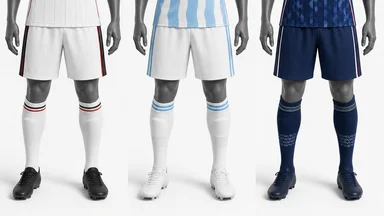
Nike's move has not gone unnoticed by its rivals. Adidas, which supplies kits for Germany, Argentina, and Spain among others, has maintained a three-year cycle for its top teams, with a new home kit every three years and away kits updated more frequently. The company's strategy is to offer more variety than Nike while still reducing churn compared to the old two-year norm. For Germany, the 2024 home kit will remain through 2027, with an away kit refresh in 2025 and a third kit for the 2026 World Cup.
Puma, which outfits Italy, Morocco, and several African federations, is experimenting with a hybrid model. For some teams, Puma offers a four-year cycle for the home kit but a two-year cycle for the away kit, allowing for a mid-cycle refresh without a full redesign. The company sees this as a way to balance brand consistency with the need for periodic novelty. Early data from Puma's Italian partnership suggests that away kit sales spike in the second year of a cycle, when fans are looking for a change from the home shirt.
Smaller brands like Hummel, Kappa, and Macron see an opportunity in the gap left by Nike's longer cycle. These brands often offer more frequent design changes as a differentiator, and they are targeting federations that want to maximize revenue from short-term tournament participation. For example, Hummel's deal with Denmark includes a two-year cycle with annual third kits, a model that appeals to federations with passionate but niche fan bases.
Market share data from a 2024 report by Euromonitor International shows Nike holding roughly 35% of the global football kit market, with Adidas at 28% and Puma at 15%. The remaining share is split among smaller brands and unbranded merchandise. Analysts at Euromonitor expect Nike's share to grow slightly as the four-year cycle strengthens its brand positioning, but the effect may be offset by smaller brands gaining ground in the mid-tier segment.
Sustainability Narrative Gains Currency
One of the most prominent justifications for the four-year cycle is its environmental benefit. Producing fewer kits over a given period reduces textile waste, lowers carbon emissions from manufacturing and transport, and decreases the volume of unsold stock that ends up in landfills. Nike has cited a roughly 30% lower carbon footprint per kit over a four-year cycle compared to a two-year cycle, though the figure depends on assumptions about production volume and consumer behavior.
Recycled polyester is now standard in Nike's match kits, and the company has adopted circular design principles that make it easier to recycle shirts at the end of their life. The longer cycle allows Nike to incorporate more sustainable materials without needing to recertify them every two years, reducing compliance costs. For consumers, the sustainability angle adds a layer of justification for a higher price point—Nike's World Cup kits typically retail in the $110–130 range, roughly 10–15% more than a standard league kit.
Critics note that the sustainability benefit is real but modest in absolute terms. The football kit industry accounts for a tiny fraction of global textile production, and the carbon savings from a longer cycle are dwarfed by the emissions from air travel to tournaments and fan travel. Moreover, if longer cycles lead to higher per-unit production volumes (to meet the same total demand), the environmental benefit narrows. Nevertheless, consumer perception of sustainability is improving slowly, and Nike's marketing around the four-year cycle emphasizes the environmental message prominently.
USMNT as a Bellwether for the 2026 Strategy
The United States men's national team kit, expected to debut in early 2025, will be the first test of Nike's four-year cycle in a major market. The USMNT is a unique case: it has a large domestic fan base with relatively low per-capita kit ownership compared to European nations, meaning there is significant room for growth. Nike is designing the kit for both domestic and global audiences, with a clean aesthetic that nods to American soccer history without leaning too heavily on patriotic clichés.
Retail partners report strong early orders, driven by anticipation for the 2026 World Cup on home soil. Nike is using the USMNT launch as a testing ground for fan engagement tactics, including a digital customization platform that allows buyers to add personal names and numbers, and a pre-order system that rewards early commitment with exclusive access to training wear. The company is also experimenting with direct-to-consumer sales via its app, bypassing traditional retailers for a portion of the inventory.
The USMNT kit will remain the primary shirt through 2029, with only minor updates such as a new goalkeeper jersey or a special edition for the 2027 Gold Cup. This consistency could help build a stronger brand identity for the team, which has historically changed kits too frequently to establish a lasting visual signature. If the strategy succeeds in the US market, Nike is likely to extend it to other large federations like Brazil and France in the next cycle.
What Clubs and Leagues Can Learn
While Nike's four-year cycle is currently focused on national teams, the model has implications for club football. Most club kits are still on an annual cycle, driven by the commercial imperative of releasing a new shirt each season. However, there are signs that the model is creaking. Premier League clubs have seen kit sales plateau in recent years, and fans have complained about the cost and frequency of new releases. Some clubs, like Liverpool and Barcelona, have experimented with two-year cycles for their home kits, with mixed results.
Nike's World Cup model may influence how the Premier League and other top leagues approach centralized licensing. If a league can negotiate a collective kit deal with a manufacturer that spans multiple seasons, it could reduce costs for clubs and create a more stable retail environment. The NBA's uniform deal with Nike, which runs on a multi-year cycle, offers a precedent. Football leagues have been slower to adopt this model, but the success of the four-year cycle for national teams could accelerate the conversation.
Fan loyalty data supports the idea that longer cycles do not necessarily reduce engagement. Surveys conducted by the Football Supporters' Association indicate that a majority of fans would prefer a new kit every two or three years rather than annually, provided the design is of high quality. The risk, however, is that casual buyers—who might buy a shirt on impulse during a successful season—will be lost if there is no new design to tempt them. Clubs that rely heavily on matchday merchandise sales may be more vulnerable to a longer cycle than clubs with diversified revenue streams.
Ultimately, the four-year cycle is not a one-size-fits-all solution. It works best for brands with strong identity and loyal fan bases, where consistency outweighs novelty. For smaller clubs or federations, a shorter cycle may still be the better commercial choice. The market will likely settle into a segmented equilibrium, with top-tier entities adopting longer cycles and mid-tier entities sticking with faster refresh rates. Whether Nike's bet pays off will depend on how well the model adapts to varying market conditions and fan preferences, a question that will be tested as the 2030 cycle approaches.