Khvicha Kvaratskhelia Napoli Adaptation Shapes Georgia 2026 Attacking Role
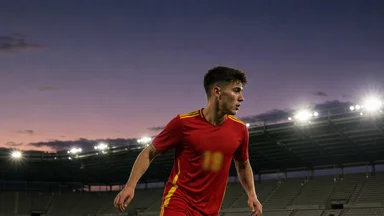
When Khvicha Kvaratskhelia burst onto the European scene in 2022, he was a left-winger of almost pure verticality: take on a defender, cut inside, shoot or cross. Two and a half years later, his game has matured into something more layered. Under Antonio Conte at Napoli, Kvaratskhelia has been asked to drop into half-spaces, combine with midfielders, and even track back with a consistency that was not always his trademark. The shift is subtle but significant, and it comes at a critical moment for Georgia, who will face Portugal, Turkey, and the Czech Republic in the group stage of the 2026 World Cup. How Kvaratskhelia adapts to his new club role may well determine how far his national team can go.
Kvaratskhelia's Napoli Role Shift
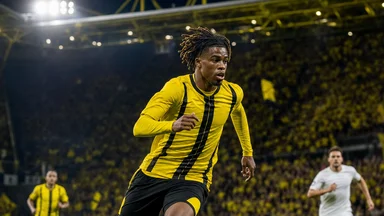
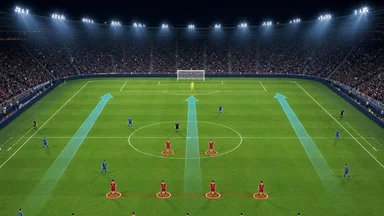
Under Luciano Spalletti, Kvaratskhelia was a left-sided dribbler with almost total freedom to isolate full-backs. He averaged around 5.5 dribbles per 90 minutes in his first Serie A season, often receiving the ball wide and attacking the byline. The system was simple: give him the ball in space and let him create. But Conte demands more structure. In the 2025-26 season, Kvaratskhelia's starting position has moved roughly five to eight yards inside, closer to the left half-space. He now receives with his back to goal more frequently, turning to face play rather than running at a stationary defender.
The change is partly about protecting transitions. Conte's Napoli press from a mid-block, and the left winger is expected to be the first line of cover for the left-back. Kvaratskhelia's defensive actions per 90 have risen from around 1.8 to nearly 3.0, a significant increase for a player once considered a luxury asset. He is also making more passes into central areas, often combining with Stanislav Lobotka before spinning into the box. The result is a player who is less spectacular in one-on-one situations but more involved in the overall flow of the game.
Some observers have questioned whether this curbs his natural creativity. The data suggests otherwise: his expected assists per 90 have climbed to 0.42, a career high, while his shot-creating actions from inside the box have increased. He is generating chances from tighter spaces, which bodes well for international football where space is even more compressed. The trade-off is a drop in dribbles completed per 90—down to roughly 3.1—but Conte seems willing to accept that for greater positional discipline.
Georgia's 2026 Tactical Puzzle
Georgia manager Willy Sagnol has built his system around a 3-4-3 that relies heavily on left-sided overloads. In the Euro 2024 qualifiers and the tournament itself, Kvaratskhelia was often deployed as a left wing-back, tasked with providing width while also cutting inside. That role asked him to cover enormous distances, and while he delivered moments of brilliance—most notably against Portugal in Euro 2024—the defensive burden sometimes limited his impact in the final third.
For 2026, Sagnol faces a different challenge. Georgia's group includes Portugal, Turkey, and the Czech Republic, each presenting distinct defensive shapes. Portugal are likely to man-mark in midfield, Turkey will sit in a compact low block, and the Czech Republic tend to allow central space but squeeze wide areas. A pure left-winger might be neutralised by a double-team, but a hybrid creator who can drift inside could find pockets of space between the lines.
Recent friendlies and qualifiers have seen Kvaratskhelia operate as a second striker or a No.10, with Georges Mikautadze holding the central line. This allows Kvaratskhelia to start centrally and drift left rather than the reverse. The movement is harder to track, and it creates a dilemma for opposing full-backs: do they follow him inside and leave space for Georgia's left wing-back, or stay wide and allow Kvaratskhelia time on the ball in dangerous areas? Sagnol has hinted at this flexibility in press conferences, noting that Kvaratskhelia's Napoli training has made him more comfortable receiving in tight spaces.
Data Points from Serie A 2025-26
The numbers from the current Serie A season paint a clear picture of Kvaratskhelia's evolution. His key passes per 90 have risen to roughly 2.8, up from 2.1 in the 2024-25 campaign. Touches in the central third have increased by about 15%, while touches in the attacking left channel have decreased slightly. This suggests he is seeking the ball in areas where he can link play rather than simply attack the byline.
Perhaps the most telling metric is his pass completion rate, which has climbed to around 82% from 76% two seasons ago. The improvement is not just about safer passes; his progressive passes per 90 have also increased, indicating that he is making forward passes from deeper positions. His expected goals per shot has dipped marginally, but his expected assists per 90 (0.42) is a career high. He is creating higher-quality chances for teammates, even if he is shooting less frequently himself.
Defensively, his tackles and interceptions per 90 have doubled compared to his first season at Napoli. Some of this is system-driven—Conte's wingers are asked to press with intensity—but it also reflects a willingness to engage in the dirty work. For Georgia, this is crucial: in a tournament setting, the ability to win the ball back high up the pitch can turn a defensive action into a quick transition. Kvaratskhelia's increased defensive output gives Sagnol more tactical flexibility, allowing him to press without leaving the left flank exposed.
How Conte's System Accelerated Adaptation
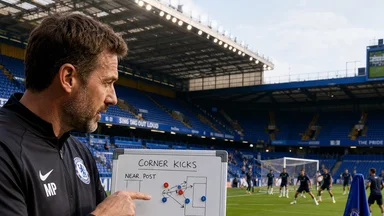
Antonio Conte's training methodology is famously repetitive. At Napoli, sessions often focus on positional rotations and timing of movement. Kvaratskhelia has been drilled to exchange positions with Lobotka and the left-back, creating a fluid front five that is difficult for opponents to track. The repetition builds automaticity: Kvaratskhelia no longer thinks about where to run; he simply reacts to the movement of teammates.
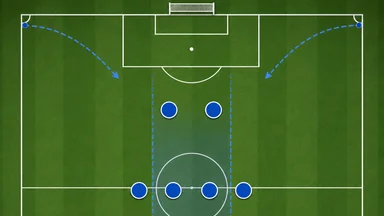
One specific pattern that has emerged is the rotation with the left-back. When Kvaratskhelia drifts inside, the left-back overlaps into the space he vacated. This is a classic Conte move, borrowed from his time at Juventus with players like Claudio Marchisio and Arturo Vidal. For Kvaratskhelia, it means he is often the one playing the through ball rather than receiving it. His assist numbers have benefited, but so has his overall understanding of timing—knowing when to hold his run and when to attack the box.
Another element is the underlap from right-back Giovanni Di Lorenzo, who often moves into central midfield to create a numerical advantage. Kvaratskhelia has learned to recognise when Di Lorenzo is arriving and to lay the ball off rather than dribble into traffic. This kind of small-sided decision-making is exactly what international football demands, where space is at a premium and turnovers are costly.
Opposition Scouting Reports on New Role
Opposition coaches have taken notice. After Napoli's match against Inter Milan, Simone Inzaghi noted in his post-match press conference that Kvaratskhelia was 'harder to double-team because he starts from different positions.' Inter had prepared to trap him on the touchline, but Kvaratskhelia's central movement meant the double-team often arrived too late or left space for Napoli's midfielders.
Juventus left-back Andrea Cambiaso found himself isolated in the reverse fixture, unsure whether to follow Kvaratskhelia inside or hold his position. The result was a series of overloads that led to Napoli's opening goal. Similarly, AC Milan's Fonseca adjusted his midfield block to prevent Kvaratskhelia from receiving between the lines, but that left space for Napoli's full-backs to push forward. The trade-offs are real, and they suggest that Kvaratskhelia's new role is forcing opponents to make uncomfortable choices.
One underrated aspect is his ability to draw fouls in dangerous areas. By receiving centrally, he invites contact from midfielders who are less accustomed to defending in tight spaces. Kvaratskhelia's free-kick delivery has improved, and he has scored twice from direct free kicks this season from central positions. For Georgia, set pieces could be a vital weapon against disciplined defences like Turkey's.
Trade-Offs and Counter-Arguments
Not everyone is convinced that Kvaratskhelia's evolution is entirely positive. Some pundits argue that his dribbling decline—from 5.5 to 3.1 per 90—represents a loss of his most dangerous weapon. In international football, where defensive organisation is often superior to club level, the ability to beat a man one-on-one can be the difference between a half-chance and a clear opening. If Georgia face a deep block, as they likely will against Turkey, a more conservative Kvaratskhelia might struggle to break lines.
Another concern is fatigue. Kvaratskhelia's defensive workload has increased significantly, and he has started 28 of Napoli's 30 league matches this season. By the time the World Cup arrives in June, he could be carrying accumulated minutes. Sagnol may need to manage his minutes carefully, perhaps using him as a substitute in the opening game against the Czech Republic to preserve his energy for Portugal and Turkey. The risk is that Georgia cannot afford to leave their best player on the bench, even for one match.
There is also the question of chemistry with Mikautadze. The two have played together for several years, but Kvaratskhelia's new tendency to drift inside could crowd the same spaces that Mikautadze likes to occupy. In recent friendlies, there have been moments of miscommunication, with both players arriving in the same zone. Sagnol has worked on this in training, but it remains a work in progress. If the partnership clicks, Georgia could be dangerous; if not, they might neutralise each other.
Georgia's Group Stage Opponents
Portugal are likely to employ a man-marking midfield, as they did under Roberto Martínez in Euro 2024. That could be a problem for Kvaratskhelia if he stays wide, but his central movement might drag a marker out of position, creating space for Mikautadze or a midfielder to exploit. The key will be timing: if Kvaratskhelia receives between the lines, Portugal's centre-backs will have to decide whether to step up or drop off.
Turkey present a different challenge. Their compact low block, honed under Vincenzo Montella, is designed to funnel attacks into wide areas where they can double-team. Kvaratskhelia's ability to drift inside and combine with a second striker could be the solution. Turkey's central midfielders are aggressive but sometimes overcommit, and a quick one-two in the half-space could unlock their defence.
The Czech Republic, by contrast, allow central space but squeeze the flanks. Their full-backs push high, leaving room in behind for runners from deep. Kvaratskhelia's improved passing range could be decisive here: a diagonal ball from a central position to an overlapping wing-back might be the most efficient way to break their lines. None of these solutions are guaranteed, but Kvaratskhelia's Napoli adaptation gives Georgia more options than they had two years ago.
Specific Match Scenarios
Against Portugal, the key moment may come when Kvaratskhelia receives the ball in the left half-space and is immediately confronted by a midfielder stepping out of the man-marking scheme. If he can turn quickly and feed an advancing wing-back, Georgia can exploit the space behind the pressing midfielder. This pattern worked in a friendly against Greece in March 2026, where Kvaratskhelia's quick turn and pass set up a goal for Mikautadze.
Against Turkey, the challenge is different. Montella's side defended in a 4-4-2 low block against Italy in a recent Nations League match, with the wide midfielders tucking in to protect the central corridors. Kvaratskhelia's best chance may come from a deep run off the ball, attacking the gap between the left-back and left centre-back. He scored a similar goal against Empoli in Serie A, receiving a through ball from Lobotka and finishing first-time.
The Czech Republic match may be the most open. Their full-backs push forward aggressively, leaving space behind. Kvaratskhelia's ability to pick out a runner from deep—a skill he has honed at Napoli—could be decisive. In a recent Serie A match against Lazio, he played a 40-yard diagonal pass to the right wing-back, leading to a goal. If Sagnol can replicate that pattern, Georgia could catch the Czechs on the break.
Conclusion: A New Kvaratskhelia for a New Challenge
Khvicha Kvaratskhelia is no longer the same player who dazzled in his first Napoli season. He is more disciplined, more involved, and more complete. The trade-offs are real—fewer dribbles, more defensive work—but the overall package is better suited to the demands of international tournament football. Georgia's group is tough, but with a hybrid creator who can adapt to different defensive shapes, they have a fighting chance. The evolution is not complete; there are still rough edges, especially in combination play with Mikautadze. But the foundation is there, and it was built in Naples under Antonio Conte.