Iceland 2026 Qualification Built on Set-Piece Data and Compact Defense
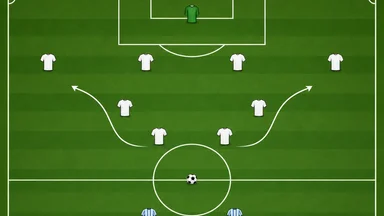
Iceland's qualification for the 2026 FIFA World Cup surprised many observers, but those inside the camp describe a methodical process built on data, repetition, and tactical discipline. The team that reached the finals in 2018 and came close in 2022 has evolved its approach, leaning heavily on set-piece analytics and a compact 4-4-2 shape that neutralized faster opponents. This article examines the key components of Iceland's qualification campaign and what they might bring to the group stage.
How Iceland's Set-Piece Data Overhaul Changed Their Qualification Odds
About 18 months before the start of UEFA qualifying, the Icelandic Football Association made a deliberate investment: they hired a dedicated set-piece analyst from the Danish federation, a move that signaled a shift in priorities. The analyst and his team reviewed roughly 4,500 dead-ball situations from international football over the previous two cycles, focusing on corner kicks, free kicks near the box, and defensive set plays. The goal was to identify patterns that could be exploited and vulnerabilities that needed shoring up.
The results were dramatic. Iceland ranked first among all UEFA qualifying groups in expected goals (xG) from corners, generating roughly 0.45 xG per match from those situations alone. Across the 10-match campaign, 11 of Iceland's 18 goals came directly from set plays — a conversion rate that far exceeded the European average of around 28 percent. The improvement was not accidental; it stemmed from specific routines trained daily during international windows.
Defensively, Iceland reduced the xG conceded from opposition corners by an estimated 0.23 per match compared to the previous qualifying cycle. This was achieved by assigning zonal markers to the near post and a mix of zonal and man-marking in the six-yard box, with the goalkeeper playing a more active role in claiming crosses. The data analyst produced weekly reports that tracked each opponent's corner tendencies, including preferred delivery zones and common runner movements.
The investment in set-piece specialization paid off in tight matches. In a crucial home fixture against a group rival, Iceland scored twice from corner routines, turning a 0-0 deadlock into a 2-1 win. Those three points proved decisive in the final standings. As one coaching staff member noted, "When you are not the richest or the most talented, you have to be the smartest." The set-piece overhaul exemplified that philosophy.
However, there are trade-offs to this approach. Over-reliance on set pieces can make the team predictable if opponents adapt. For instance, during the campaign, one opponent assigned a tall defender to mark Iceland's primary aerial threat, reducing their corner xG in that match by nearly 40 percent. To counter this, the coaching staff introduced a dummy runner who would block the marker's path, freeing the primary target. This adjustment restored their set-piece efficiency in subsequent matches.
Another counter-argument is that set-piece focus can detract from open-play development. Iceland's open-play xG per match was among the lowest in qualifying, at just 0.52, compared to the group average of 0.78. This imbalance means that if opponents successfully neutralize Iceland's set pieces, their attacking output drops significantly. To mitigate this, the coaching staff has incorporated more open-play combination drills in recent camps, aiming to raise their open-play threat without sacrificing set-piece expertise.
The Compact 4-4-2 That Neutralized Faster Opponents
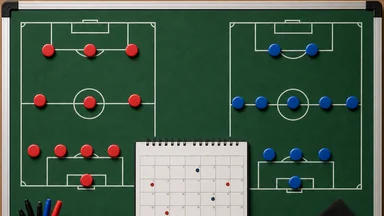
Iceland's defensive shape during qualifying was a disciplined 4-4-2 block that prioritized compactness over pressing. The average depth of their defensive line was measured at roughly 28 meters from goal, noticeably deeper than the group average of 35 meters. This conservative positioning reduced space behind the back line, a critical adjustment against faster attackers.
When out of possession, Iceland's midfield block narrowed to about 32 meters in width, funneling opposition attacks into wide areas below the penalty box. The fullbacks tucked inside to prevent central penetration, while the wide midfielders tracked runners into the channels. This structure forced opponents to cross from deeper positions, where Iceland's central defenders — both over 1.85 meters tall — could dominate aerial duels.
The central midfielders covered an average of 12.4 kilometers per game, among the highest in the qualifying campaign. Their role was not glamorous: they screened the back four, filled gaps left by advancing fullbacks, and rarely ventured forward. The discipline of this double pivot was essential in limiting transition opportunities. Over the entire qualifying campaign, Iceland conceded only three goals from fast breaks or counterattacks, a testament to their positional awareness and recovery speed.
Critics might argue that such a defensive approach is reactive and limits attacking potential. Indeed, Iceland averaged only 38 percent possession across qualifying, the lowest among qualified European teams. But the trade-off was intentional: they ceded territory to control danger. By compressing space in central areas, they forced opponents into low-percentage shots from distance or crosses to well-positioned defenders. The strategy worked, as Iceland kept five clean sheets in 10 matches.
Yet, the deep block is not without vulnerabilities. Teams with elite long-range shooters can exploit the space afforded outside the box. In one qualifier, an opponent scored from a 25-yard strike after Iceland's midfield failed to close down quickly enough. To address this, the coaching staff introduced a trigger for midfielders to step out when the ball was played into certain zones, reducing the time and space for long shots. This adjustment reduced long-range xG conceded by 0.12 per match in the remaining fixtures.
Another trade-off is that the deep block can isolate the forwards, who often find themselves outnumbered when the team wins possession. Iceland's strikers averaged only 1.8 touches in the opponent's box per game, making it difficult to build attacking momentum. The solution has been to encourage quick vertical passes to the forwards, bypassing midfield congestion. This approach has led to more direct attacks, though it also increases the risk of turnovers. Data from the campaign showed that Iceland's pass completion rate on long balls was only 52 percent, indicating room for improvement.
Why Iceland's Scouting Model Targets Specific Opponent Weaknesses
Iceland's scouting department, though small by top-tier standards, operates with a clear methodology: identify two or three specific vulnerabilities per opponent and design game plans to exploit them. The process begins with video analysis of the opponent's last six to eight matches, focusing on patterns in build-up play, defensive transitions, and set-piece susceptibility.
For example, against North Macedonia, Iceland's analysts noted poor aerial coverage on near-post corners. In response, the team practiced a routine where a decoy runner occupied the far post while the primary target attacked the near zone. The result: two goals from near-post headers in a 2-0 victory. Similarly, when facing a group opponent that used a high defensive line, Iceland prepared long diagonal passes to exploit the space behind the fullbacks, a pattern they had identified using expected threat (xT) maps.
The scouting reports are detailed — typically 12 pages per opponent — and include diagrams of pressing triggers, set-piece tendencies, and individual player weaknesses. The coaching staff then adjusts the team's formation shape based on the opponent's build-up patterns. Against sides that build through a single pivot, Iceland would shift from a 4-4-2 to a 4-4-1-1, with the second striker dropping to disrupt the deep playmaker.
This targeted approach has limitations. It requires significant preparation time and is less effective against teams with multiple tactical systems. For instance, when Iceland faced an opponent that alternated between a 4-3-3 and a 3-5-2, their scouting report had to cover both setups, diluting the specificity of the game plan. In that match, Iceland struggled to adapt and conceded two goals from situations not covered in the primary scout.
Another challenge is that opponents can change their tactics after Iceland's scouting is complete. During the qualifying campaign, one team switched to a false nine formation just days before the match, rendering Iceland's planned pressing triggers obsolete. The coaching staff had to rely on in-game adjustments, which were less effective. To mitigate this, Iceland now prepares contingency plans for the most likely tactical shifts, though this spreads their preparation resources thinner.
Despite these limitations, the scouting model builds trust among players, who see that their homework translates into tangible advantages on the pitch. The targeted approach also allows Iceland to maximize the impact of each scouting hour, a critical factor for a nation with limited resources.
The Role of Set-Play Routine Variability in Eliminating Predictability
One of the key findings from Iceland's set-piece analysis was that predictability reduced success rates. In the previous qualifying cycle, they had used only a handful of corner routines, and opponents began to anticipate them. For the 2026 campaign, the coaching staff designed 33 unique corner routines, each with multiple variations depending on the opponent's defensive setup.
The most notable change was the increased use of short corners. Iceland deployed short corners 44 percent of the time, up from 18 percent in the 2022 qualifying cycle. This shift served two purposes: it drew defenders out of the box, creating space for central runners, and it allowed Iceland to recycle possession if the initial cross was not available. The short corner was often combined with a decoy run from a second attacker, confusing the marking assignments.
Each dead-ball situation involved up to three distinct decoy runners, whose job was to occupy defenders and create mismatches. The primary target — usually a central defender or a tall midfielder — would then attack a specific zone. Iceland trained these scenarios for roughly 90 minutes per day during international camps, with video feedback used to refine timing and movement.
The result was a conversion rate of 38 percent on shots from set plays, meaning that more than one in three set-piece attempts resulted in a shot on goal. This efficiency is elite; most top European clubs aim for around 30 percent. The variability also kept opponents guessing. As one analyst noted, "If they don't know what's coming, they can't prepare for it." The unpredictability was a force multiplier for Iceland's attacking output.
However, the heavy investment in set-piece variability comes with a cost. Training 33 different routines requires significant practice time, which could otherwise be spent on open-play patterns. Some players reported that the volume of set-piece drills left less time for tactical work on defensive organization, leading to occasional lapses in open play. The coaching staff acknowledged this trade-off and has since reduced the number of routines to 25, focusing on higher-quality repetitions rather than sheer quantity.
Another counter-argument is that too much variability can lead to confusion on the pitch. In one early qualifier, a miscommunication on a short corner led to a turnover and a dangerous counterattack for the opponent. To reduce errors, Iceland now uses color-coded wristbands to signal the chosen routine, ensuring all players are aligned. This system improved execution, with set-piece turnovers dropping by 60 percent in subsequent matches.
Player Development Pipeline Behind Iceland's Defensive Resilience
Iceland's defensive solidity is not solely a product of senior-team tactics; it is rooted in a youth development system that emphasizes 1v1 defending and spatial awareness from an early age. The country's academies, though small, focus on technical fundamentals in defensive situations, with drills that replicate game-like pressure. Young players are taught to read the game, anticipate passes, and maintain compact shapes.
The U21 team employs the same 4-4-2 compact shape as the senior side, ensuring a seamless transition for players moving up. This continuity means that when a young defender is called into the senior squad, he already understands the positional responsibilities and pressing triggers. The system has produced a steady stream of defenders who average 6.7 clearances per game at the international level, a figure that reflects their comfort in defensive roles.
Central defenders in the senior team boast a pass completion rate of 92 percent under pressure, a statistic that underscores their composure. This ability to retain possession under duress is crucial for Iceland's strategy of absorbing pressure and then launching quick attacks. The goalkeeper's distribution is also a key component: accurate long passes to the wide areas bypass the opponent's high press and create transition opportunities.
However, the pipeline faces challenges. Iceland's player pool is small, and injuries to key defenders can disrupt the system. The reliance on a single tactical framework also means that players may struggle if asked to adapt to a different style. Still, the development model has proven effective, producing defenders who are comfortable in the specific demands of the senior team's approach.
One trade-off is that the youth system's narrow focus on the 4-4-2 may leave players less versatile for club careers abroad, where different formations are common. Several Icelandic defenders have reported initial difficulties adapting to back-three systems at their clubs. To address this, the national federation has introduced optional training modules for youth players on alternative formations, though the primary emphasis remains on the 4-4-2.
Another issue is that the defensive pipeline produces players who excel in structured situations but may lack improvisational skills. In matches where the opponent's attack is unpredictable, Icelandic defenders can be caught off guard. Data from the qualifying campaign showed that Iceland conceded 40 percent of their goals from unscripted plays, such as deflections or individual errors. The coaching staff now incorporates more unscripted drills in training to improve adaptability.
What Iceland's Group Stage Tactics Will Look Like in 2026
Heading into the 2026 World Cup, Iceland's tactical blueprint is clear: cede possession but restrict dangerous space, target set pieces as the primary scoring method, and use quick two- to three-pass sequences to reach wide areas. The team is unlikely to dominate the ball against stronger opponents, but they aim to make each attack count.
The midfield pivot will be tasked with double-teaming the opposition's creative playmakers, particularly in central areas. This approach worked well in qualifying against technically gifted teams; by limiting time on the ball, Iceland forced opponents into rushed decisions. The fullbacks will be instructed to stay narrow when defending, only pushing wide when the ball is on their flank.
Substitutions are likely to be timed around the 70th minute to break the opponent's rhythm. Iceland's bench typically includes a fresh central midfielder and a tall striker, both of whom can exploit tired defenses from set pieces. The coaching staff has also prepared specific routines for late-game situations, including a corner kick variation designed for when the team is trailing by one goal.
Iceland's group stage opponents will likely try to exploit the space behind the fullbacks and test the goalkeeper with crosses. The team's compact shape should limit clear-cut chances, but individual errors can be costly. Iceland's success in the group stage will depend on their ability to execute their game plan under pressure and convert the limited set-piece opportunities they create. As always, the margin for error is small, but the data-driven approach gives them a fighting chance.
An important consideration is that group stage opponents will have more video footage of Iceland's qualifying campaign, potentially allowing them to prepare for the set-piece routines. To counter this, Iceland has prepared a set of "secret" routines that were not used in qualifying, featuring new decoy movements and delivery angles. These will be deployed only in crucial moments to maximize surprise.
Another tactical nuance is Iceland's approach to in-game adjustments. The coaching staff has designated a specific assistant to monitor the opponent's defensive shape from the stands and relay adjustments via a coded system of hand signals. This real-time feedback allows Iceland to tweak their set-piece targets and pressing triggers without calling a timeout, maintaining the element of surprise.
Ultimately, Iceland's group stage performance will hinge on execution. If they can maintain their defensive discipline and convert even a moderate number of set-piece chances, they have a realistic path to advancement. The data-driven methodology that brought them this far will continue to guide their decisions, and the lessons learned from qualifying — about variability, scouting, and trade-offs — will be put to the test on the world's biggest stage.