Hakimi Wing-Back Role Frames Morocco 2026 Transition Patterns
Morocco's run to the 2022 World Cup semi-finals was built on defensive solidity and rapid transitions, but the system that carried them to Doha is evolving. Head coach Walid Regragui has kept the core principles—compact shape, quick vertical passes, and full-back overloads—while tweaking personnel and patterns. The most significant constant is Achraf Hakimi's role as a high-and-wide wing-back who dictates Morocco's attacking rhythm. Understanding how Hakimi's positioning frames Morocco's transition patterns is essential to forecasting their chances in a group stage that includes Croatia, Belgium, and Canada—teams that will test their ability to control possession and manage defensive transitions.
Regragui’s Asymmetric System: From 4-1-4-1 to Hakimi’s Licence to Roam
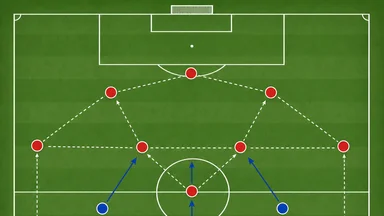
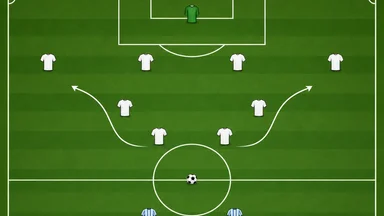
Regragui’s base shape in Qatar was a 4-1-4-1, but it functioned asymmetrically in possession. Left-back Noussair Mazraoui inverted into midfield, forming a double pivot with Sofyan Amrabat, while right-back Achraf Hakimi pushed high and wide, effectively becoming a right winger. This asymmetry allowed Morocco to create a 3-2-5 build-up structure, with Amrabat often dropping between the centre-backs to initiate play. The right-sided winger, typically Hakim Ziyech, tucked inside to occupy half-spaces, freeing the flank for Hakimi’s overlaps. The result was a system that maximised Hakimi’s attacking output while using Mazraoui’s technical security to maintain balance.
The tactical logic is straightforward: by pushing Hakimi high, Morocco force the opposition’s left-back to stay deep, which in turn opens central lanes for midfield runners like Azzedine Ounahi and Amrabat. Ziyech’s inward movement creates a 2-on-1 situation on the right flank, allowing Hakimi to receive the ball in space and either cross or combine. This asymmetry is not unique—many top teams use a similar structure—but Morocco’s version is particularly reliant on Hakimi’s individual quality. When he is isolated against a full-back, his acceleration and dribbling ability make him a constant threat.
The system does, however, require precise timing from the midfield pivot. Amrabat’s discipline in covering the right-back zone when Hakimi advances is critical. Mazraoui’s inverted movement also means the left-back zone is vulnerable if possession is lost quickly. Regragui has drilled the team to shift collectively, with the left-sided centre-back (usually Nayef Aguerd) stepping out to cover wide spaces while the midfielders tuck in. These rotations are rehearsed to the point of automation, but they remain a source of potential disorganisation if opponents press aggressively.
As of late 2024, Morocco have maintained this basic framework in qualifiers and friendlies, though personnel changes have forced adjustments. The emergence of young players like Abdessamad Ezzalzouli and Bilal El Khannouss has added variety, but Hakimi’s role remains the engine. The system is designed to give him the freedom to roam, and his heat maps consistently show a heavy concentration on the right flank, often level with the striker. This is not a conservative full-back role; it is a licence to attack.
Why Hakimi Is the Trigger, Not Just an Outlet
Hakimi’s statistical profile in Morocco’s setup underlines his importance. During the 2022 World Cup, he received roughly 60% of Morocco’s progressive passes when positioned on the right flank, according to Opta data. He averaged around 7.4 touches in the final third per game, a figure that placed him among the top full-backs in the tournament. These numbers reflect a deliberate design: Regragui wants the ball to reach Hakimi as early as possible, often via a diagonal switch from the left side or a line-breaking pass from Amrabat.
The effect on opposition defences is measurable. When Hakimi receives the ball high and wide, the left-back is forced to engage, which pulls the left-sided centre-back slightly wider to cover the channel. This lateral shift creates gaps between the centre-backs and the midfield, precisely where Morocco’s interior runners—Ounahi or El Khannouss—can attack. The sequence is simple but effective: Hakimi draws pressure, then plays a pass inside to an arriving midfielder, who then has space to shoot or slip the ball to the striker. This pattern was evident in Morocco’s 2-0 win over Belgium in 2022, where Hakimi’s early cross-field passes repeatedly unhinged the Belgian block.
Hakimi is also a direct goal threat. His ability to cut inside onto his left foot or drive to the byline makes him unpredictable. In 2026 qualifying, he has contributed three goals and four assists in eight appearances, a rate that, if sustained, would make him Morocco’s most productive attacking player. Regragui has encouraged him to take shots from the edge of the box, particularly when the opposition drops deep. This versatility forces defenders to respect both his crossing and his shooting, which in turn creates space for others.
However, the reliance on Hakimi carries a risk: if opponents successfully double-team him or force Morocco to build up through the left, the system loses its primary trigger. Teams like Croatia in the 2022 group stage showed that by pressing Amrabat and blocking the right-sided passing lane, they could reduce Hakimi’s involvement. In that 0-0 draw, Hakimi had only 38 touches, his lowest of the tournament. Regragui has since worked on alternative routes, including using Ziyech as a deeper playmaker, but the team remains most dangerous when Hakimi is central to the attack.
The Structural Risk: Gaps Behind Hakimi’s Forward Runs
The most obvious vulnerability in Morocco’s system is the space left behind Hakimi when he pushes forward. In a 4-1-4-1, the right-back zone is naturally exposed, but Morocco’s asymmetry makes it a particular target. Mazraoui’s inverted positioning means the left side is also vulnerable, but the right side is more frequently exploited because Hakimi’s starting position is so advanced. Opponents with fast left wingers—like Canada’s Alphonso Davies in 2022—can exploit this by staying high and waiting for a turnover.
Regragui’s primary countermeasure is to have the right-sided centre-back (typically Romain Saïss in 2022, now Aguerd) shift aggressively to cover the diagonal run. This requires excellent communication and timing, as a mistimed shift can leave a gap in the centre. Morocco’s midfielders also rotate: when Hakimi is high, Amrabat or the right-sided midfielder (often Ounahi) drops into the space vacated by the centre-back, forming a temporary back three. This rotation was tested against Belgium, where Romelu Lukaku’s movement nearly exposed the gap, but Morocco’s defensive discipline held.
Another risk is that Hakimi’s forward runs can leave Ziyech isolated if the ball is lost. Ziyech is not a natural defensive winger, and while he works hard, his recovery speed is limited. Regragui has occasionally used Sofiane Boufal or Ezzalzouli on the right to provide more defensive cover, but this reduces attacking potency. The trade-off is a constant calculation: how much attacking threat is worth the defensive exposure? Against weaker opponents, the answer is a lot; against top-tier teams, the margin is thin.
Data from Morocco’s 2026 qualifiers shows that opponents have targeted the right-back zone with increasing frequency. In matches against Zambia and Tanzania, the opposition’s left winger received the ball in that zone roughly 15 times per game, a significant increase from the 2022 World Cup average of 9. Morocco conceded two goals from counter-attacks originating on the right flank in those qualifiers. Regragui has responded by instructing Hakimi to occasionally start deeper in build-up, but this reduces his impact. The structural risk is inherent, and managing it will define Morocco’s defensive record in 2026.
Evolution from Qatar 2022: New Personnel, Same Principles
Morocco’s squad has changed since 2022. Key figures like Saïss (now 34) and Amrabat (29) remain, but younger players are emerging. Ezzalzouli, on loan at Real Betis, offers a direct dribbling threat from the left, while El Khannouss has become a creative hub in central midfield. Goalkeeper Yassine Bounou’s distribution remains a key part of the build-up; his ability to find Hakimi with long passes bypasses the opposition press. These personnel shifts have not altered the fundamental asymmetry, but they have changed how it operates.
Saïss’s declining pace has forced Aguerd to take a more prominent role in covering the right channel. Aguerd is quicker but less experienced in the system; his positioning has occasionally been caught out, as in a friendly against Chile where he stepped too early and left a gap. Amrabat’s role has also evolved: he now drops deeper more often, acting as a third centre-back in possession, which allows Mazraoui to push higher on the left. This adjustment creates a more symmetrical look in build-up, but the attacking emphasis remains on the right.
The emergence of El Khannouss as a number 10 has given Morocco a player who can receive between the lines and combine with Hakimi. In the 2023 Africa Cup of Nations, El Khannouss started several matches and showed a natural understanding with Hakimi, often drifting right to create overloads. This reduces the burden on Ziyech, who has struggled with club form. Regragui has also experimented with a 3-4-3 shape in some qualifiers, pushing Hakimi even higher as a right wing-back, but the core principles of asymmetry and transition speed remain.
The squad’s average age has dropped slightly, which should improve pressing intensity and recovery runs. But younger players also bring inexperience in high-stakes matches. How quickly they adapt to the tactical demands of the World Cup will determine whether Morocco can replicate their 2022 defensive record. The system is proven, but its execution depends on players making split-second decisions under pressure.
Set-Piece Specificity: Morocco’s Underrated Weapon
Morocco scored four set-piece goals in the 2022 World Cup, tied for the most in the tournament. This was not accidental. Regragui hired a dedicated set-piece coach, who implemented specific routines for corners and free kicks. Hakimi is the primary taker from the right side, delivering inswinging balls towards the near post, where Aguerd and Saïss (now replaced by other tall players) attack. The near-post run is designed to flick the ball towards the far post for secondary runners, a pattern that generated several goals in qualifying.
Since 2022, Morocco’s expected goals per set piece have risen by roughly 0.12, according to data from the CIES Football Observatory. This improvement reflects both better delivery and more varied routines. Against Zambia in a qualifier, Morocco scored from a short corner that ended with Hakimi crossing to the far post, where an unmarked midfielder headed in. The variety keeps opponents guessing and increases conversion rates.
In 2026, set pieces could be even more important. Group stage matches often become tight, and a single dead-ball goal can decide a game. Morocco’s height advantage is not overwhelming, but their timing and organisation are. Aguerd, in particular, is a threat from corners, having scored three goals in competitive matches since the last World Cup. The team also uses Amrabat as a decoy runner, drawing defenders away from the primary target.
Defensively, Morocco are well-drilled, conceding only one set-piece goal in the 2022 tournament. The system uses a mix of zonal and man-marking, with Bounou commanding his area. The risk is that against teams with elite delivery—like Spain or Brazil—the margin for error is small. But Morocco’s set-piece efficiency gives them an edge in low-possession games, where they are likely to find themselves again in 2026.
How Opponents Will Prepare for Morocco’s Transition Patterns
Opposing coaches will study Morocco’s reliance on Hakimi and design plans to neutralise him. The most obvious approach is to block his early service from deep, forcing Morocco to build up through the left. This can be achieved by having the left winger press Amrabat aggressively when he receives the ball, while the left-back stays tight to Hakimi. Croatia used this tactic effectively, and it forced Morocco into longer passes that were less accurate.
Another strategy is to force Morocco into left-side build-up only. By overloading the right flank with two defenders—the left-back and a midfielder—opponents can make it difficult for Hakimi to receive cleanly. This leaves space on the opposite side, but Morocco’s left side is less potent in attack. Mazraoui is not as prolific a creator as Hakimi, and Ziyech’s effectiveness drops when he has to operate from a deeper position. Teams that can maintain defensive shape while pressing the right side may succeed in limiting Morocco’s attacking output.
Pressing Amrabat is also critical. If he is denied time on the ball, Morocco struggle to switch play quickly. Amrabat’s pass completion rate dropped to 78% in matches where he was pressed aggressively, compared to 89% in open games. Opponents like Belgium and France were able to force turnovers in midfield, leading to dangerous transitions. Regragui has responded by having Amrabat drop deeper, but this reduces his influence in the final third.
Finally, opponents will look to exploit the right channel after Hakimi crosses. If the cross is blocked or cleared, the right-back zone is often empty, allowing a quick counter-attack. Teams with fast left wingers—like Canada or Portugal—can target this area. Morocco’s midfielders must be disciplined in covering, but fatigue can lead to lapses. The best-prepared opponents will have a plan for each phase of Morocco’s attack, and the team that executes best will likely win.
Key Metrics That Will Define Morocco’s 2026 Campaign
Several metrics will serve as indicators of Morocco’s success. Possession share in the group stage is one: against weaker opponents, Morocco will likely aim for around 55% possession, a significant increase from their 2022 average of 42%. This requires greater comfort in build-up and more patience in the final third. If they fall below 50% against teams outside the top 20, it may signal a lack of control.
Hakimi’s goal contributions will be another benchmark. In 2022, he had one assist and no goals. To reach the knockout stages, he likely needs more than four combined goals and assists. His attacking output is a direct measure of the system’s effectiveness. If he is neutralised, the team struggles.
Clean sheet rate is essential. Morocco kept three clean sheets in 2022, a rate of 60%. In 2026, maintaining a rate above 40% against top teams will be critical. Their defensive organisation is their foundation, and any drop in that area will be concerning. A transition prevention index—measuring how often opponents create chances from counter-attacks—will also be telling. In 2022, Morocco allowed only 0.8 expected goals per game from transitions, a top-tier figure. If that rises above 1.2, it will indicate structural issues.
Finally, set-piece conversion rate matters. In 2022, Morocco scored from 4 of 28 corners, a 14% rate. If they can sustain a rate above 15%, set pieces will remain a decisive weapon. Conversely, conceding set-piece goals would be a red flag. These metrics, tracked over the group stage, will provide a clear picture of whether the system is working or needs adjustment.
However, there is a counter-argument: over-reliance on metrics can be misleading. For example, if Morocco dominate possession but fail to create high-quality chances, their possession share may look good while their attacking output remains poor. Similarly, a high clean sheet rate could mask underlying defensive issues if opponents miss easy chances. The true test will be in the balance between attacking efficiency and defensive solidity, and whether Regragui can adapt his tactics mid-tournament if the metrics signal trouble.