Visa Tiers and Time-Zone Jumps Reshape 2026 Fan Travel Routes
When the 2026 FIFA World Cup kicks off across 16 stadiums in three countries, fans will face a travel puzzle unlike any previous tournament. The United States, Canada, and Mexico each maintain separate entry requirements, operate in different time zones, and offer distinct flight networks. For supporters planning to follow their team through the group stage and beyond, the logistical burden is real—and it starts long before kick-off.
Three Hosts, Three Visa Regimes, One Tournament
The most immediate hurdle for international fans is navigating three separate immigration systems. The United States uses the Visa Waiver Program (ESTA) for citizens of roughly 40 countries, allowing visa-free stays up to 90 days with an approved online application. Canada operates its own Electronic Travel Authorization (eTA), a separate $7 CAD application that must be completed even if a fan already holds an ESTA. Mexico, meanwhile, issues a Forma Migratoria Múltiple (FMM) at the border or online, granting up to 180 days for most nationalities. This means a fan traveling from, say, London to New York for a match, then on to Toronto, and finally to Mexico City, must apply for three separate permissions. While the ESTA and eTA are typically processed within minutes, the added bureaucracy has caused confusion. Fan advocacy groups have flagged the issue since 2023, warning that supporters accustomed to single-country tournaments may not realise they need multiple authorisations.
Consulates in major football markets have reported a surge in inquiries. For example, the US consulate in London noted a roughly 30% increase in visa-related questions compared to previous summers, according to staff quoted in travel trade press. The problem is compounded for fans from countries that do not qualify for any visa waiver—they must apply for a B-1/B-2 visitor visa for the US, a visitor visa for Canada, and a Mexican visa, each with separate fees and processing times that can stretch weeks or months.
Let's break down the specifics. An ESTA approval is valid for two years and costs $21. It covers multiple entries to the US, but it does not grant entry to Canada or Mexico. A Canada eTA costs $7 CAD, is valid for five years, and is processed almost instantly in most cases. The Mexico FMM is free if obtained online before travel, though the paper version at land borders may carry a small fee. Each has its own conditions: ESTA holders must have a passport with an electronic chip; eTA applicants need a valid passport and a credit card; FMM forms require a return ticket or proof of onward travel. The key issue is that these systems are not interconnected. A fan with an approved ESTA cannot use it to enter Canada, and vice versa. For a trip that includes all three countries, the fan must submit three separate applications, remember three different reference numbers, and carry printed confirmations for each. Some travel agents now offer "World Cup visa packages" that bundle the applications for a fee, but independent travellers must manage the process themselves.
Travel forums and social media groups are filled with stories of fans who assumed a US visa would cover Canada, or that an eTA would work for Mexico. The US State Department and Canadian immigration authorities have published joint guidance, but the message has not fully penetrated the casual fan base. One UK-based fan group told a football podcast in early 2025 that they had to cancel a planned three-nation itinerary because a member's ESTA was revoked after a previous overstay—an issue that would not have affected a single-country tournament. For fans from countries like Brazil, Argentina, or India, the situation is more demanding. They must apply for a US visitor visa (currently $185, plus a visa issuance fee that varies by country), a Canadian visitor visa ($100 CAD), and a Mexican visa (free or low cost depending on nationality). Processing times for US visas in some South American cities can exceed six months during peak periods. The tournament's scheduling—with group stage matches spread across June and July—means fans must plan their applications well in advance, ideally by late 2025.
Time-Zone Jumps: From Pacific to Eastern to Central
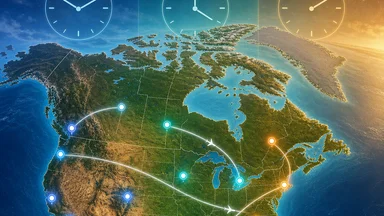
Once the paperwork is sorted, fans confront the physical challenge of time-zone shifts. The 2026 World Cup spans four time zones: Pacific (Los Angeles, Vancouver, Seattle), Mountain (Denver), Central (Mexico City, Guadalajara, Monterrey, Chicago, Houston, Dallas, Kansas City), and Eastern (New York, Toronto, Boston, Philadelphia, Miami, Atlanta). In July, most of the US and Canada observe daylight saving time, so Pacific is UTC-7, Mountain UTC-6, Central UTC-5, and Eastern UTC-4. Mexico City stays on Central Standard Time year-round, so in July it is UTC-6—one hour behind US Central time.
A fan attending matches in Vancouver (UTC-7) on a Tuesday, then flying to New York (UTC-4) for a Saturday match, loses three hours in travel. The body's circadian rhythm typically adjusts at a rate of about one day per time zone crossed, meaning a three-hour shift requires roughly three days to fully adapt. With matches scheduled every three to four days in the group stage, there is little room for recovery. Sports scientists recommend scheduling a rest day for every time zone crossed, but that is not always possible when tickets are fixed.
The problem is most acute for fans following a team that plays in both Pacific and Eastern venues. For example, a supporter of a European team that plays its first match in Los Angeles and its second in New York would have just four days between games—barely enough to travel and adjust. Some travel agencies now offer "jet-lag management" packages that include melatonin, light exposure schedules, and pre-adapted sleep routines, but these are niche and expensive. Fans already living in the Americas will face smaller shifts, and those attending only one or two matches in a single time zone can avoid the issue entirely. But for the most dedicated travellers—the ones planning to attend 10 or more matches across multiple venues—the cumulative effect of repeated time-zone jumps can be significant, affecting energy levels, decision-making, and even the enjoyment of the tournament.
Direct Flights vs. Multi-Stop Itineraries
Flight routes between host cities are another constraint. Some city pairs are well connected: Newark to Mexico City is a direct flight of roughly five hours; Los Angeles to Vancouver takes about three hours; and Dallas to Mexico City is a common route. But other connections are far less convenient. There is no direct flight between Guadalajara and Toronto, for instance. A fan making that journey would typically connect through Dallas or Houston, adding six to eight hours of layover time.
Airlines have responded by adding new routes for the summer of 2026. According to industry reports from late 2024, carriers including American Airlines, United, and Volaris announced roughly 12 additional seasonal routes linking host cities, such as Seattle-Monterrey and Philadelphia-Guadalajara. These are mostly short-lived summer additions, so fans should book early to secure seats. The risk is that if a team's schedule changes due to knockout stage qualification, fans may need to rebook on short notice—a costly proposition during peak travel season.
For fans on a budget, multi-stop itineraries are often the only option. A trip from Vancouver to Mexico City might involve a stop in Phoenix or Dallas, turning a three-hour direct flight into a six-hour journey. Connecting through major hubs like Dallas/Fort Worth, Atlanta, or Chicago O'Hare can be efficient, but these airports are likely to be crowded during the tournament. Some travel experts recommend adding a buffer day between flights to account for delays. The geography of the tournament means that some distances are deceptive. Los Angeles to Seattle is roughly 1,500 km, but the flight time is only about two and a half hours. In contrast, Mexico City to Toronto is over 3,500 km, with a flight time of roughly five hours direct—if the route exists. Fans relying on road travel between some border cities, like San Diego to Tijuana, can make short trips, but for longer cross-country journeys, flying is the only practical option.
Budget Airlines Fill the Gaps at Lower Cost
Budget carriers have stepped in to offer cheaper alternatives on certain routes. Viva Aerobus, a Mexican low-cost airline, has expanded its network to include routes like Monterrey-Chicago and Guadalajara-Las Vegas. Flair Airlines, a Canadian ultra-low-cost carrier, connects Edmonton to Las Vegas and Vancouver to Phoenix. Fares on these routes can be as low as $99 one-way on select days, though baggage fees and strict carry-on size limits can quickly add $50–$100 per segment.
Flight aggregator Kayak reported in early 2025 that bookings for travel between US and Mexican host cities were up roughly 18% compared to the same period in 2023, suggesting that fans are already planning cross-border itineraries. However, budget airlines often operate from secondary airports—for example, Viva Aerobus uses Mexico City's Felipe Ángeles International Airport (NLU) rather than the main Benito Juárez International (MEX). NLU is about 40 km north of the city centre, adding travel time and cost for ground transport. Fans should check which airport they are flying into and factor in the extra transfer.
Budget airlines have thinner networks and may not offer rebooking options as flexible as full-service carriers. During the 2022 World Cup in Qatar, some low-cost carriers cancelled flights at short notice, leaving fans scrambling. For the 2026 tournament, travel insurance that covers trip interruption and medical evacuation is worth considering, especially for fans crossing multiple borders. Some fans have opted for multi-city flight passes offered by airlines like Air Canada's "World Cup Stopover" or Delta's "Game Changer" package, which bundle flights between multiple host cities at a discounted rate. These are still being finalised as of late 2024, but early indications suggest they could save fans 15–20% compared to booking each leg separately.
Fan Zones and Accommodation Clusters Near Borders
Accommodation prices in host cities are expected to surge, as they do during any major tournament. Some fans are turning to border-zone strategies to save money. For example, fans attending matches in San Diego can stay in Tijuana, Mexico, where hotel rates are typically lower. Similarly, Buffalo, New York, serves as a cheaper base for matches in Toronto—roughly a two-hour drive or bus ride. Airbnb listings near the US-Mexico border crossings in places like Nogales, Arizona, and El Paso, Texas, have increased by roughly 40% since 2023, according to data shared by a short-term rental analytics firm.
In some cases, temporary fan villages are being planned. The city of Nogales, Sonora, has announced a "fan village" with camping pods and shuttle buses to the border during the group stage, though details are still emerging. These options are attractive for budget-conscious fans, but they come with trade-offs: crossing the border daily means time spent in queues, which can be long during peak hours. The US Customs and Border Protection agency has said it will staff additional lanes during the tournament, but wait times could still exceed an hour.
For fans staying in Canada, the situation is reversed. Windsor, Ontario, across the river from Detroit, is a popular base for matches in Detroit. Hotel prices in Windsor are expected to be lower than in Detroit, and the tunnel bus service runs regularly. However, fans must have valid US entry documents to cross back into the US for matches, and the border crossing can be unpredictable. Some travel advisors recommend booking accommodation in the host city itself if the budget allows, to avoid the daily commute. Another option is "cluster accommodation" near stadiums that are close to each other. For example, the stadiums in Los Angeles (SoFi Stadium) and Pasadena (Rose Bowl) are about 30 km apart, so fans attending matches at both can stay in a central location like downtown LA. Similarly, the three Mexican host cities—Mexico City, Guadalajara, and Monterrey—are spread across the country, but each has a concentrated cluster of hotels near the stadium. Booking early is critical: during the 2018 World Cup in Russia, accommodation prices in host cities tripled during match weeks.
Practical Packing for a Three-Country Trip
Given the complexity, packing smart is essential. First and foremost, carry printed copies of all visa documents: ESTA confirmation, eTA approval, and FMM form. Electronic copies on a phone can be helpful, but border agents may ask for a physical copy, especially at land crossings. A passport with at least six months validity beyond the travel dates is required for all three countries.
Offline maps and translation apps are useful for navigating each country, especially in Mexico where English is less common outside tourist areas. A power adapter is another must: the US and Mexico use the same two-prong plug (Type A/B), and Canada uses the same standard, so a single adapter works for all three. However, voltage is 110-120V across all three, so most modern electronics will work without a converter.
Travel insurance covering medical evacuation is strongly recommended, as healthcare costs in the US can be exorbitant. A routine hospital visit can cost thousands of dollars, and emergency evacuation from a remote stadium to a major hospital could run into the tens of thousands. Some insurance providers offer "World Cup-specific" policies that include coverage for trip cancellation due to visa denial or match schedule changes.
Finally, plan rest days between cross-border moves. A typical itinerary might include a match in Vancouver on a Saturday, then a flight to Mexico City on Sunday, with a rest day on Monday before the next match on Tuesday. This allows the body to adjust to the time zone and reduces the risk of travel fatigue. Many fan groups are sharing sample itineraries online, and some travel agencies now offer "World Cup travel planners" that build in these buffers. The key is to accept that the tournament is as much a logistical challenge as a sporting one—and to treat the journey as part of the experience. As the tournament approaches, more resources will become available, and fans who plan ahead will be better positioned to enjoy the matches without being overwhelmed by the logistics.