Germany High-Press Triggers and Raum Split-Backs Reshape 2026 Build-Up
Germany's build-up play under Julian Nagelsmann has evolved into a distinctive system that hinges on split-back rotations and aggressive press triggers. As the 2026 World Cup approaches, the national team's tactical identity is taking shape around the left-back David Raum and the versatile Joshua Kimmich, who often inverts into midfield from the right. This approach aims to create numerical superiority in the first phase, but it also exposes structural gaps that opponents have learned to exploit. By examining specific match minutes, set-piece patterns, and recent personnel experiments, we can map the likely contours of Germany's game model in two years' time.
The Tension Between Raum and the Midfield Line
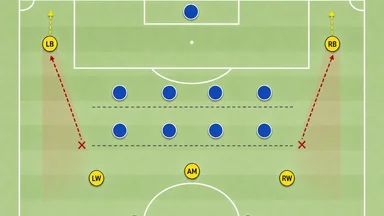
One of the defining features of Germany's recent build-up is the split-back configuration on goal kicks. Raum, nominally a left-back, often drops deep alongside the centre-backs while Kimmich pushes up into the midfield line. This creates a temporary back-three, but the spacing between Raum and the midfield can become stretched. In the match against France in 2024, for example, Raum received the ball near his own penalty area while Kimmich was already high up the pitch, leaving a gap roughly 30 metres wide between them. Opponents have started to press that gap aggressively.
When the opposition triggers a high press, Germany's midfield line—typically anchored by Robert Andrich or a similar holding midfielder—must shift laterally to cover Raum's inward runs. This often leaves the central channel momentarily vacant. Against Austria in a 2024 friendly, Christoph Baumgartner exploited this exact space, intercepting a pass intended for Kimmich and forcing Manuel Neuer into a save. The tension is structural: Raum's split-back role gives Germany an extra man in the first phase, but it also demands that the midfield cover more ground horizontally.
Kimmich's drop into a back-three during possession is another layer. When Germany builds from the back, Kimmich often tucks inside to form a three-man backline with Antonio Rüdiger and Jonathan Tah. This allows Raum to push higher, but it also means that Germany's most creative passer is often deeper than ideal. The trade-off is clear: better ball progression from deep, but a slower transition into attacking positions. Against high-pressing sides like Spain in 2024, this delay proved costly, as Spain's forwards closed down the passing lanes before Kimmich could release a forward pass.
The first-phase strain is most visible when Germany faces a man-oriented press. In the 2024 match against Hungary, the opposition's midfielders marked Kimmich closely whenever he dropped deep, forcing Neuer to go long. Germany won only about 40% of the aerial duels from those long balls, according to Opta data. These moments highlight the fragility of the split-back system when opponents deny time on the ball. Nagelsmann's solution has been to ask Raum to receive on the half-turn more often, but that requires precise timing and movement from the midfield line.
Press Triggers: When Germany Bites
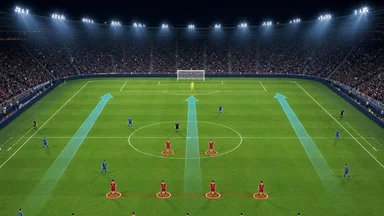
Germany's own high press is activated by three primary triggers, each tied to specific game situations. The first is when the opposition goalkeeper distributes with his weak foot. In the 2024 friendly against France, Mike Maignan's left-footed clearance was immediately pressured by Niclas Füllkrug, who closed down the centre-back and forced a hurried pass. The second trigger occurs when a centre-back receives the ball while facing his own goal. Rüdiger is particularly aggressive in these moments, stepping out to engage the ball carrier before he can turn.
The third trigger involves a full-back receiving with his back to the touchline. This is a vulnerable position because the full-back cannot see the entire field and is often forced to play a backward pass. Germany's wingers, typically Florian Wirtz or Jamal Musiala, are instructed to sprint toward the full-back in that moment, cutting off the passing lane to the centre-back. Against Japan in 2024, this trigger led directly to a turnover that nearly resulted in a goal. The press is not constant; it is event-based, which conserves energy but requires sharp decision-making.
Andrich's role in sealing the nearest passing lane is critical. When Rüdiger steps out on trigger 2, Andrich shifts to block the pass to the opposition's holding midfielder. This creates a temporary 2v1 situation around the ball, often forcing a long ball that Germany's centre-backs can win in the air. The system works well against teams that lack a reliable target man, but it has struggled against sides with quick, technical forwards who can receive on the half-turn and play a first-time pass.
These press triggers are not unique to Germany—many top sides use similar cues—but the coordination between Rüdiger's step-out and Andrich's lane seal is a hallmark of Nagelsmann's approach. The risk is that if the first press is bypassed, Germany's midfield line is left exposed. Against Spain in the 2024 friendly, a single pass through the press allowed Pedri to drive into the space behind Andrich, leading to a shot on target. The margin for error is small, and Germany's press success rate, as of the September 2024 international break, hovered around 35% in terms of forcing turnovers in the final third—respectable but not elite.
The Split-Back Mechanism Under Nagelsmann
In possession, Germany's split-back mechanism transforms the 4-2-3-1 into a 2-3-5 or 3-2-5 shape. Raum and Kimmich are the key operators. Raum inverts from left-back into the left half-space, while Kimmich tucks inside from right-back to form a midfield trio. This creates a box midfield with Wirtz and Musiala occupying the half-spaces between the lines. The full-backs push high, and the centre-backs split wide, with Neuer often acting as a sweeper-keeper. The aim is to create a 5-v-4 advantage against a back-four, with numerical superiority in wide areas.
The 2-3-5 shape is most effective when Germany can progress the ball quickly through the thirds. In the September 2024 friendly against France, a typical sequence saw Kimmich receive from Tah, play a diagonal to Raum, who then found Wirtz in the inside-left channel. Within three passes, Germany had bypassed the French midfield. But this requires precise spacing: if Raum drifts too wide, the half-space collapses; if he stays too narrow, the full-back can press him. The balance is delicate, and Nagelsmann has experimented with using Robin Gosens as a hybrid left-winger to offer a more direct option.
Gosens' role in previous cycles provides a useful comparison. Under Hansi Flick, Gosens often played as a traditional wing-back, overlapping and crossing from deep. Under Nagelsmann, he has been asked to tuck inside more, almost as a second striker when Germany has the ball. This variation gives Germany a different look: Gosens is less of a creator than Raum but offers more physical presence in the box. The trade-off is that Gosens' defensive positioning is less natural when the ball is lost, leaving the left flank exposed.
The central gap between the split-backs and the midfield line is the system's biggest vulnerability. When Germany turns over possession, the two holding midfielders—often Andrich and Kimmich—must cover the space vacated by Raum's forward runs. Against quick transitions, this leaves Rüdiger and Tah isolated. In the 2024 match against Japan, a turnover in Germany's half led to a 3-v-2 situation that ended with a goal. The split-back mechanism is a high-risk, high-reward structure that demands exceptional stamina and tactical discipline from the full-backs.
Set-Piece Patterns: Corners and Free Kicks
Germany's set-piece routines have become a reliable source of goals under Nagelsmann. The near-post flick-on from corners is a staple. In the September 2024 friendly against France, a corner from the left was delivered to the near post, where Rüdiger flicked it on to Tah, who headed home from close range. The routine relies on Rüdiger's ability to win the first contact and Tah's positioning to attack the second ball. Opponents have started to assign a man to block Rüdiger's run, but Germany's variation—with a short corner option—keeps defences guessing.
The short-corner variation involves Kimmich receiving a short pass and then crossing from a slightly wider angle. This allows Germany to create a 2-v-1 situation against the first defender and often results in a more accurate delivery. In the same match against France, this variation produced a chance for Füllkrug, who narrowly missed with a header. The short corner also forces the defending team to shift its zonal markers, occasionally creating gaps at the near post that Germany's second runners can exploit.
From free kicks in the 20–25 metre range, Germany has a clear hierarchy. Kimmich and Wirtz are the primary takers, with Kimmich favouring a curled shot to the far post and Wirtz preferring a driven strike under the wall. Against Austria in 2024, Wirtz scored from a free kick that deflected off the wall, illustrating the unpredictability of his technique. The direct-shot option is not always the first choice; Germany sometimes uses a short pass to create a crossing angle, especially when the wall is well-positioned.
Second-phase deliveries from free kicks and corners are another weapon. Tah often stays back as a target for cleared balls, using his height to flick the ball into the box again. This tactic worked against Hungary in 2024, where a cleared corner was headed back by Tah, leading to a goalmouth scramble that ended with a penalty. Germany's set-piece success rate, as of the October 2024 international window, was roughly 12% of corners resulting in a goal, which is above the international average of around 8%. The patterns are well-drilled, but opponents have started to study them closely.
How Opponents Have Exploited the Build-Up
Several teams have found effective ways to disrupt Germany's build-up. Austria in 2024 employed a man-marking approach on Kimmich whenever he dropped deep. By denying him time on the ball, Austria forced Germany to play through Rüdiger, who is less comfortable under pressure. The result was a series of long balls that Austria's centre-backs easily dealt with. This tactic requires a disciplined midfielder willing to follow Kimmich everywhere, but it effectively neutralised Germany's primary ball progressor.
Japan in 2024 took a different approach: they pressed Raum high up the pitch, forcing him to play back to his centre-backs or go long. Raum's left foot is excellent, but under pressure he sometimes misplaces passes. Japan's forwards closed him quickly, and when he did play long, the ball often went to Japan's goalkeeper. This strategy also exposed Raum's defensive transitions: when Japan won the ball, they attacked the space behind him, creating several 2-v-1 situations. Germany's left side became a recurring vulnerability.
Hungary in 2024 blocked the central passing lanes, essentially daring Germany to play wide. By positioning their midfielders to cut off passes to Kimmich and Andrich, Hungary forced Germany's centre-backs to pass to the full-backs, who were then pressed. This compressed Germany's shape and limited their ability to switch play. The tactic worked well until Germany adjusted by having Wirtz drop deeper to receive, but that then left fewer players in attacking positions.
Spain in 2024 provided the most comprehensive blueprint. They trapped Germany in their own third by pressing with a front four and man-marking the midfield. Spain's forwards closed the passing lanes to the centre-backs, while their midfielders shadowed Kimmich and Andrich. The result was that Germany's build-up stalled, and Neuer was forced to kick long repeatedly. Spain won the aerial duels and then counter-pressed, creating turnovers in dangerous areas. This match highlighted the limits of the split-back system against a team with superior technical quality and tactical discipline.
Personnel Adjustments for 2026
Looking ahead to the 2026 World Cup, several personnel decisions will shape Germany's tactical identity. Kimmich is likely to continue as the starting right-back, given his influence on the build-up, but his age (31 by 2026) may require careful management. The emergence of Aleksandar Pavlovic or Angelo Stiller as a single-pivot option could allow Kimmich to stay higher up the pitch more often. Pavlovic's passing range and composure under pressure make him an intriguing candidate to anchor the midfield, freeing Kimmich to focus on creativity.
The role of Wirtz is another key question. He has thrived as a central playmaker, but his best performances for Germany have come when he drifts wide left. If Nagelsmann decides to keep him central, that may push Musiala to the right, where he is less effective. Conversely, playing Wirtz wide could limit his involvement in the build-up. The debate is ongoing, and the answer may depend on the opponent. Against deep blocks, Wirtz's central creativity is more valuable; against high presses, his wide movement helps escape pressure.
Füllkrug's role as a target man for direct exits is another variable. When Germany faces a high press, Füllkrug's ability to hold up the ball and bring others into play is crucial. His aerial strength also makes him a threat from long balls. However, his lack of pace limits Germany's ability to counter quickly. Nagelsmann has experimented with using a faster striker, but the team's build-up often suffers without a focal point. The balance between directness and possession will be a central tactical dilemma.
At centre-back, the choice between Nico Schlotterbeck and Tah illustrates a trade-off. Schlotterbeck's progressive passing—he averaged roughly 8–10 passes into the final third per 90 minutes in the 2024-25 Bundesliga season—helps Germany bypass the press, but his defensive lapses have cost goals. Tah is more reliable one-on-one but offers less in possession. Nagelsmann has favoured Tah for his solidity, but against teams that press high, Schlotterbeck's passing might be the better option. The decision may come down to the specific match-up.
Practical Takeaways for Future Matches
For opponents preparing to face Germany, several tactical principles emerge from the analysis. First, forcing Germany to play long from goal kicks disrupts their rhythm. By pressing the centre-backs and man-marking Kimmich, teams can deny Germany's preferred build-up and force Neuer to kick long. Second, targeting Raum's defensive transitions—especially when he is high up the pitch—can create dangerous counter-attacks. Quick forwards should look to run at the space behind him when Germany loses possession.
Third, blocking Kimmich's diagonal switches limits Germany's ability to stretch the defence. Kimmich's long passes to the opposite flank are a key weapon; if a winger or midfielder can close that passing lane, Germany's attack becomes more predictable. Fourth, applying second-ball pressure after clearances is effective because Germany's centre-backs are not always well-positioned to win the second ball. Hungary used this tactic with some success, winning several second balls in midfield.
Fifth, exploiting the space between the split-backs and the midfield line requires quick, vertical passing. Teams that can play through the press and find a forward in that gap can create 3-v-3 situations against Germany's backline. Spain's success in 2024 was built on this principle. The split-back system is not inherently flawed, but it demands that every player execute their role with precision. When one player is off, the entire structure can collapse.
Germany's tactical evolution under Nagelsmann is a work in progress. The split-back rotations and press triggers have added variety to their game, but the vulnerabilities are clear. As the 2026 World Cup approaches, the team will need to refine its build-up against high-level opposition. The next two years of friendlies and competitive matches will reveal whether Nagelsmann can solve the structural tensions or whether opponents have already found the blueprint. For now, Germany remains a fascinating case study in modern tactical football—innovative but still searching for the final pieces.
Additional Tactical Nuances: Counter-Pressing and Transitional Shape
Beyond the initial build-up, Germany's counter-pressing structure after losing possession is a critical component of Nagelsmann's system. When the ball is turned over in the attacking third, the nearest players—typically Wirtz, Musiala, or Füllkrug—are instructed to press the ball carrier immediately, while the midfield and defensive lines shift to compress space. This approach aims to win the ball back within five seconds, a principle borrowed from top club sides. In the March 2024 friendly against France, Germany successfully counter-pressed three times in the first half, leading to two shots on goal. However, the counter-press is less effective when the turnover occurs in wide areas, as the split-backs may be out of position.
The transitional shape when Germany loses the ball in midfield is particularly vulnerable. Because Raum often pushes high and Kimmich tucks inside, the full-back positions are vacant. Opponents have exploited this by quickly switching play to the opposite flank. In the 2024 match against Hungary, a turnover in the left half-space led to a diagonal pass to the right wing, where Hungary's winger had space to run at Tah. Germany's cover—usually Andrich or a centre-back—is often too slow to close down. This vulnerability has led Nagelsmann to experiment with a more conservative approach in certain matches, asking Raum to stay deeper when Germany is leading.
Another layer is the use of the goalkeeper in build-up. Neuer's sweeper-keeper role is well-known, but under Nagelsmann, he is also asked to play short passes to the split-backs. This adds an extra option to bypass the first line of pressure. In the September 2024 friendly against France, Neuer played a key pass to Raum that broke the French press, leading to a goal. However, this carries risk: if Neuer's pass is intercepted, he is out of position. Against Japan in 2024, a misplaced pass from Neuer nearly led to a goal. The balance between risk and reward is a constant consideration.
Germany's adaptability in different phases of the game is a strength. When protecting a lead, Nagelsmann often switches to a 5-4-1 low block, with Gosens or Raum dropping to form a back-five. This reduces the space behind the full-backs but limits counter-attacking opportunities. In the 2024 match against Austria, Germany led 2-1 and shifted to a low block, successfully absorbing pressure. The team's ability to toggle between high and low blocks is a tactical asset, but it requires clear communication and discipline, especially from the split-backs who must adjust their positioning.