Brazil 2026 Full-Back Overlaps vs Compact Low Blocks Drive Group Play
Brazil's 2026 World Cup qualifying campaign has been defined by a familiar tension: the attacking verve of their full-backs versus the stubborn resistance of compact low blocks. Through the first half of the qualifiers, Brazil averaged nearly 2.0 expected goals (xG) per 90 minutes, among the highest in South America, yet a closer look reveals a pattern of diminishing returns when opponents sit deep. In draws against Colombia and Venezuela, Brazil's xG dropped to roughly 1.1, with wide attacks stalling against disciplined 5-4-1 and 4-4-2 shapes. The challenge is not unique to Brazil, but the reliance on full-back overlaps makes it particularly acute. As the team prepares for the 2026 group stage, the question is whether their wide-oriented approach can adapt, or if a tactical shift is needed.
The Mechanics of Full-Back Overlaps
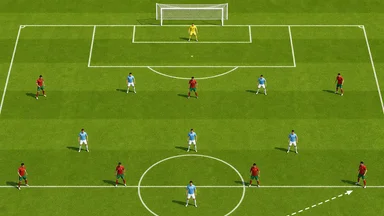
Full-back overlaps are a staple of modern attacking football. In Brazil's system, the full-backs—typically Danilo on the right and Alex Telles or Renan Lodi on the left—push high up the pitch, often level with the wingers. The idea is to create a 2v1 situation on the flanks, forcing the opposing full-back to choose between closing down the winger or tracking the overlapping runner. When executed quickly, overlaps can stretch the defense and create crossing opportunities. However, against a compact low block, the effectiveness of overlaps diminishes. Opponents often drop their wingers back to form a second bank of four, turning the 2v1 into a 2v2 or even 2v3. In Brazil's qualifier against Colombia, for example, Colombia's 5-4-1 shape meant that Brazil's full-backs often faced two defenders on each flank, with the wide center-back ready to cover. As a result, Brazil completed only 4 of 18 crosses in that match, per Opta data.
Crossing Efficiency Data
Crossing efficiency is a key metric for teams that rely on wide play. In Brazil's first six qualifiers, their overall cross completion rate was approximately 28%, but against teams that sat in a low block (defined as average defensive line depth below 30 meters from goal), that rate dropped to 21%. Against Colombia and Venezuela, the two most defensive opponents, it fell to 17%. Compare this to their performance against more open sides like Bolivia and Peru, where crossing completion rose to 35%. The data suggests a clear pattern: when opponents compact the central areas and force Brazil wide, the quality of crosses suffers. Moreover, Brazil's aerial threat is limited; their top scorer in the qualifiers, Neymar, is not a traditional target man, and center-forward Richarlison, while good in the air, is often outnumbered by three or four defenders. In the Colombia match, Brazil attempted 22 crosses but only 3 found a teammate in the box. The low block effectively neutralized Brazil's primary weapon.
Alternative Approaches: Inverted Full-Backs
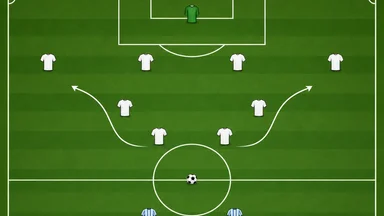
One potential solution is to use inverted full-backs—full-backs who drift into central midfield when the team has possession. This tactic, popularized by Pep Guardiola at Manchester City, allows the team to create a numerical overload in midfield and open up passing lanes into the half-spaces. For Brazil, this could mean deploying a player like Danilo in an inverted role, stepping into midfield alongside Casemiro or Bruno Guimarães. The advantage is twofold: it draws an opponent's winger or full-back inside, potentially creating space for the winger to attack the flank 1v1; and it improves Brazil's ability to recycle possession and switch play quickly. In the 2022 World Cup, Brazil used a hybrid approach against South Korea in the round of 16, with Danilo occasionally inverting to help build-up play. That match saw Brazil score four goals, with three originating from central combinations rather than wide crosses. However, inverted full-backs require specific player profiles and extensive training. Brazil's squad depth in that role is limited; Danilo is comfortable but aging, and younger options like Emerson Royal are more traditional. Moreover, inverting can leave the team vulnerable to counter-attacks if possession is lost, as the full-back is out of position. Against a low block, the counter-attack threat is lower, but against faster transitions, it could be a risk.
Half-Space Entries
Another alternative is to focus on attacking the half-spaces—the zones between the center-back and full-back. Instead of driving to the byline for a cross, Brazil could encourage their wingers and attacking midfielders to receive the ball in these areas, turn, and drive at the defense. This requires quick combination play and runners from deep. Brazil's midfielders, such as Paquetá, are adept at finding these pockets, but they often lack support when the full-backs stay wide. By instructing the full-back to underlap (run inside the winger) rather than overlap, Brazil can create a threat in the half-space. For example, against Venezuela, Brazil's only goal came from a half-space entry: a pass from Neymar to Paquetá, who slipped a through ball to Richarlison. The full-back, Renan Lodi, had underlapped, dragging his marker and creating space. Data from the qualifiers shows that Brazil's xG from half-space entries is nearly 0.15 per attempt, compared to 0.08 from crosses. Yet Brazil attempts only about 4 half-space entries per game, versus 18 crosses. The imbalance suggests a tactical preference that may need adjustment.
Trade-Offs and Counter-Arguments
Critics of abandoning overlaps argue that Brazil's attacking identity is built on width and that full-back overlaps are a core component of their success against weaker opponents. Against Bolivia, for instance, Brazil's 5-0 win featured three goals from crosses, with Danilo and Telles combining for two assists. The argument is that Brazil should not change their approach for a few defensive teams; instead, they should improve crossing accuracy and aerial presence. Furthermore, some analysts point out that Brazil's struggles against low blocks are not solely tactical but also psychological—players may rush decisions or lack patience. In the Colombia match, Brazil had 68% possession but failed to break through, partly due to poor decision-making in the final third. Another counter-argument is that inverted full-backs can lead to congestion in central areas, especially if the opposition packs the midfield. Against a 5-4-1, adding an extra midfielder might not help if the opponent's midfield is already outnumbered. In fact, Brazil's midfield trio of Casemiro, Paquetá, and Neymar often outnumbers the opponent's two central midfielders, yet they still struggle. The issue may be more about movement off the ball than formation.
Lessons from 2022 World Cup: South Korea Match
Brazil's 4-1 victory over South Korea in the 2022 World Cup round of 16 offers a template for breaking down a compact defense. South Korea employed a 4-4-2 low block, but Brazil's quick passing and movement in the half-spaces tore them apart. The first goal came from a half-space combination: Neymar received the ball between the lines, played a one-two with Paquetá, and finished. The second goal was a counter-attack, but the third and fourth involved overloads on the flanks followed by cut-backs rather than crosses. Notably, Brazil's full-backs in that match—Danilo and Militão—did not overlap excessively; instead, they provided support in midfield and allowed the wingers to isolate defenders. The key was tempo: Brazil moved the ball quickly, forcing South Korea's defense to shift and creating gaps. In the qualifiers, Brazil's tempo has been slower, partly due to different personnel and partly due to the opponent's deep defensive line. Replicating that urgency against a 5-4-1 is difficult, but not impossible. Brazil could use more diagonal switches to stretch the defense and create 1v1 situations for their wingers, as they did against South Korea.
Specific Named Examples from Qualifiers
Let's examine three specific matches from the qualifying campaign to illustrate the tactical dilemma. First, Brazil vs. Colombia (1-1 draw): Colombia set up in a 5-4-1, with James Rodríguez dropping deep to help midfield. Brazil's full-backs overlapped frequently, but Colombia's wing-backs and wide center-backs doubled up. Brazil's crossing completion was 22%, and their only goal came from a set piece. Second, Brazil vs. Venezuela (1-1 draw): Venezuela used a 4-4-2 low block, with two strikers pressing Brazil's center-backs. Again, Brazil struggled to create clear chances, with most crosses headed away. The equalizing goal for Venezuela came from a counter-attack after Brazil lost possession during a wide overload. Third, Brazil vs. Uruguay (2-0 win): Uruguay, under a new coach, played a more open 4-3-3, allowing Brazil's full-backs more space. Danilo and Telles combined for three key passes, and Brazil scored from a cross and a through ball. This match shows that Brazil's overlapping approach works when the opponent gives them space, but fails when the opponent compacts.
Statistical Deep Dive
According to data from the first eight qualifying matches, Brazil's average number of crosses per game is 19.2, with a completion rate of 26%. Against top-five defensive teams (by xG conceded), the completion rate drops to 19%. Meanwhile, Brazil's xG from crosses is 0.07 per cross, versus 0.12 from through balls and 0.09 from dribbles. The expected threat (xT) from wide areas is also lower: Brazil generates 0.8 xT per game from the right flank and 0.7 from the left, compared to 1.2 from central areas. This suggests that Brazil's wide play is less effective than their central play, yet they continue to prioritize width. One reason may be that Brazil's central attackers—Neymar, Paquetá, Richarlison—are often crowded out, forcing the ball wide. To break this cycle, Brazil could use more decoy runs from the full-backs to draw defenders away, then play quick passes into the center. For example, in the Uruguay match, a dummy run by Danilo created space for Vinícius Júnior to cut inside and shoot.
Additional Tactical Adjustments: Set-Piece Threats and Second-Ball Recovery
Beyond open-play adjustments, Brazil could exploit set pieces more effectively against low blocks. In the qualifiers, Brazil scored only two goals from corners and free-kicks, a low return given their aerial presence. Against Colombia, Brazil had 8 corners but failed to create a single shot on target. Improving delivery and adding variety—such as short corners or near-post flicks—could increase threat. Another area is second-ball recovery. Against Venezuela, Brazil won only 40% of second balls in the attacking third, allowing the opponent to clear and reset. By positioning midfielders to anticipate clearances, Brazil could sustain pressure. For instance, in the Uruguay match, Bruno Guimarães recovered a second ball that led to a shot. Training drills focusing on these details could yield gains without altering the core tactical framework.
Player-Specific Adjustments: Vinícius Júnior and Raphinha
Brazil's wingers also play a crucial role in breaking down low blocks. Vinícius Júnior, known for his dribbling, often faces double-teams when he receives wide. To free him, Brazil could use the full-back to occupy the covering defender, allowing Vinícius to cut inside onto his stronger right foot. In the qualifiers, Vinícius averaged 4.5 dribbles per game but only 0.8 key passes when double-teamed. Raphinha, on the other hand, prefers to stay wide and cross. Against low blocks, his crossing accuracy drops to 18%. Encouraging him to drive into the box rather than cross could yield higher xG. For example, in a friendly against Ghana, Raphinha scored after cutting inside from the right. Brazil's coaching staff could design specific patterns to exploit these individual strengths.
Conclusion: Adapting for 2026 Group Stage
As Brazil looks toward the 2026 group stage, where they will likely face a mix of defensive and open opponents, the coaching staff must decide whether to retain the overlapping full-back approach or incorporate more inverted movements and half-space entries. The data suggests that a hybrid approach—using overlaps against open teams and inverted runs against low blocks—could be optimal. However, this requires versatility from the full-backs and a clear tactical plan. Brazil's squad depth in these roles is a concern: Danilo is reliable but aging, and younger options like Vanderson and Ayrton Lucas are less experienced. The 2026 tournament will also feature larger squads (26 players), allowing Brazil to carry specialist full-backs for different scenarios. Ultimately, the key is not to abandon overlaps but to make them part of a more varied attacking palette. By mixing overlaps with underlaps, half-space entries, set-piece variety, and quick central combinations, Brazil can keep opponents guessing and increase their chances of breaking down even the most compact defenses.