Three-Country Distance and Visa Windows Define 2026 Fan Routing
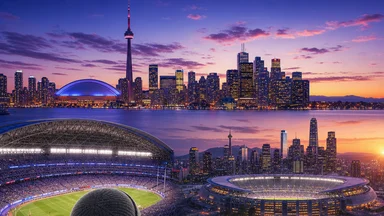
The 2026 World Cup will be the first edition hosted by three nations, a logistical experiment that promises to reshape how supporters plan their journeys. With 16 host cities spread across the United States, Canada, and Mexico, fans face a puzzle of visa regimes, flight connections, time-zone shifts, and stadium accessibility that has no precedent in the tournament's history. The distances alone are daunting: Mexico City to Vancouver is roughly 4,000 kilometers, and the time difference between easternmost host city Toronto and westernmost host city Vancouver is three hours, with Mexico City on Central Time adding another layer. For the traveling fan, the 2026 World Cup is not a single event but a series of interlocking decisions about which matches to attend, which borders to cross, and how to manage the friction of a three-country itinerary.
The Three-Border Puzzle: How Visa Regimes Fragment the 2026 Fan Journey
The first hurdle for many international fans is navigating three separate entry systems. The United States requires most visitors to obtain a visa or an Electronic System for Travel Authorization (ESTA) under the Visa Waiver Program. Canada operates its own Electronic Travel Authorization (eTA) for visa-exempt nationals, while Mexico offers visa-free access to many countries but also requires a visa for others. These systems are not interchangeable, and a fan holding a valid US visa cannot automatically enter Canada or Mexico without additional documentation.
FIFA has promoted a 'Fan ID' system for ticket holders, but this is not a visa waiver. The Fan ID, similar to the one used during the 2022 World Cup in Qatar, is designed to facilitate stadium entry and provide some travel benefits, but it does not override national immigration laws. As of late 2024, discussions between FIFA and the three host governments have not produced a unified visa policy. Fans from countries that require visas for all three nations—such as India, China, or Nigeria—will need to apply separately to each, a process that can take weeks or months and requires careful timing.
The 48-hour visa-free transit rule in Mexico, which allows travelers to stay in the country for up to two days without a visa if they are en route to a third destination, could be a useful loophole for fans connecting through Mexico City. However, this rule is not widely advertised and may not apply to all nationalities. Canadian and US immigration authorities have similar transit provisions, but they are restrictive and often require proof of onward travel. The net effect is that fans planning multi-country itineraries will need to budget significant time for visa applications and risk denial if they fail to meet the requirements.
Travel agencies like G3 Global have begun offering 'World Cup visa packages' that include assistance with applications for all three countries, but these services come at a cost and do not guarantee approval. The safest approach for fans is to apply early, ideally six months before travel, and to have backup plans in case one visa is delayed or rejected. The three-border puzzle is arguably the most underappreciated challenge of the 2026 tournament, and it will likely deter some fans from attending matches in multiple countries.
Flight-Logic Disconnect: Why the Host Cities Defy Simple Hub-and-Spoke Routing
Even with visas in hand, fans face a flight network that does not align neatly with the tournament's geography. Of the 16 host cities, there are no direct flights between 8 of them, according to publicly available route data as of early 2025. For example, a fan wanting to see matches in Mexico City and Vancouver would need to connect through a hub like Los Angeles or Dallas, adding at least four hours of layover time. The average journey time between Monterrey and Edmonton is around 12 hours, including connections, despite the two cities being roughly 3,500 kilometers apart.
The United States benefits from a dense domestic network, with frequent flights between cities like New York, Atlanta, and Los Angeles. But Canada and Mexico have less connectivity. Toronto and Vancouver are well-served, but cities like Edmonton and Guadalajara have fewer international connections. A fan flying from Europe to a match in Monterrey might find it easier to fly into Houston and drive the 300 kilometers south, rather than navigating limited direct flights. FIFA has encouraged fans to book flights early, but the airline industry has been slow to add capacity for the tournament. Some carriers have announced seasonal routes, such as Air Canada's planned direct flights between Toronto and Mexico City during the World Cup period, but these are not yet confirmed. As of late 2024, the most reliable strategy for fans is to book refundable tickets and be flexible with dates, as last-minute schedule changes are common.
The flight-logic disconnect also affects fans who want to follow their national team across multiple venues. A team drawn in a group that includes matches in Seattle and Mexico City would force fans to choose between a long-haul flight or a multi-day road trip. The secondary ticket market may see arbitrage opportunities on routes where demand spikes, but the lack of direct flights will keep prices high and travel times long.
Time-Zone Tax: How 4-Hour Spreads Force Fans to Choose Between Sleep and Matches
The time-zone spread across the three host countries is roughly four hours, from Pacific Time (Vancouver, Seattle, Los Angeles) to Eastern Time (Toronto, Boston, New York) and Central Time (Mexico City, Guadalajara, Monterrey). This may not seem extreme, but for fans traveling between venues, the effect is cumulative. A match kicking off at 8 p.m. in Guadalajara is 2 a.m. in Toronto the next day, meaning a fan who flies east after the game loses a night of sleep. Conversely, a 7 p.m. match in Edmonton is 10 p.m. in New York, which is manageable but still disruptive.
FIFA's broadcast schedule typically favors prime-time slots in the host country's largest market, which for 2026 is likely the United States. This means that matches in Mexico and Canada may be scheduled to accommodate US television audiences, resulting in early afternoon kickoffs in Vancouver (for a 4 p.m. Eastern broadcast) or late evening starts in Mexico City (for a 9 p.m. Eastern broadcast). Fans attending matches in person will feel the time-zone tax most acutely when they cross borders.
For fans from Europe, the time difference is even starker. A 3 p.m. match in Los Angeles is 11 p.m. in London, and an 8 p.m. match in Mexico City is 3 a.m. in Paris. European fans may need to adjust their sleep schedules significantly, and those traveling between time zones within North America will face jet lag even on short trips. The time-zone tax is a hidden cost that is rarely factored into travel budgets, but it will affect match enjoyment and overall trip satisfaction.
Some fans may choose to stay in one time zone for the duration of the tournament, limiting their attendance to matches in a single region. Others may prioritize sleep by booking overnight flights or staying in cities with minimal time-zone shifts. The time-zone tax is not insurmountable, but it is another factor that makes the 2026 World Cup more logistically demanding than previous editions.
The 90-Minute City Trap: Stadiums That Seem Close But Require Overnight Stays
Several host cities are geographically close to each other, but the travel time between them can be deceptive. For example, Estadio Azteca in Mexico City and Estadio Universitario in Monterrey are roughly 900 kilometers apart, a drive of about 10 hours. A fan might assume they can attend a match in Mexico City and then drive to Monterrey the next day, but in practice, the journey requires an overnight stay. Similarly, BC Place in Vancouver and CenturyLink Field in Seattle are only 230 kilometers apart, but the border crossing and traffic can add two hours to the drive, making a same-day round trip impractical for back-to-back matches.
BMO Field in Toronto and Gillette Stadium in Boston are about 750 kilometers apart, a drive of roughly 7 hours. A fan could theoretically drive after a match and arrive in Boston by early morning, but this is not realistic for most travelers. The '90-minute city' trap is that these cities appear close on a map but require significant time and effort to traverse, especially when factoring in border controls and traffic congestion.
FIFA has organized a shuttle service between some nearby host cities, but the details are still being finalized. As of late 2024, plans for a high-speed rail connection between Los Angeles and San Francisco remain uncertain, and no cross-border rail service is scheduled for the tournament. Buses and ride-shares will be available, but they are subject to the same border delays.
For fans, the safest approach is to assume that any inter-city travel will take at least half a day, and to book accommodation accordingly. The temptation to pack multiple matches into a short period should be tempered by realistic travel times. The 90-minute city trap is a reminder that distance on a map is not the same as travel time, especially in a three-country tournament.
Group-Stage Scheduling Roulette: How Draw Results Dictate Cross-Border Itineraries
The group-stage draw, which will take place in late 2025, will determine which teams play in which venues, and this will have a huge impact on fan travel. FIFA's 'cluster' strategy aims to keep teams within a single region for the group stage, but the three-country format means that some teams will inevitably cross borders. For example, a group that includes matches in Toronto, Mexico City, and Los Angeles would force a team to travel roughly 7,000 kilometers over two weeks, and fans following that team would face similar distances.
Fan groups are already booking refundable tickets and flexible accommodations, anticipating that the draw could send their team to any of the 16 venues. Some travel agencies offer 'team-specific' packages that include tickets and lodging for all group-stage matches, but these are expensive and may not cover last-minute changes. The secondary ticket market will see fluctuations based on draw results, with prices for matches in popular venues like Mexico City or Los Angeles likely to spike.
The scheduling roulette also affects fans who want to attend multiple matches without following a single team. A fan who buys tickets for matches in different cities may find that the kickoff times overlap or that travel between them is impossible within the schedule. FIFA releases the match schedule before the draw, but the specific dates and times are subject to change, adding another layer of uncertainty.
For the average fan, the best strategy is to wait for the draw before making non-refundable bookings, but this means paying higher prices for last-minute travel. The group-stage scheduling roulette is a classic trade-off between cost and flexibility, and there is no right answer. Some fans will gamble on early bookings, while others will wait and pay a premium.
Accommodation Arbitrage: Why Hotels in Suburbs and Second Cities Offer Better Value
Hotel prices in host cities are expected to spike during the World Cup, as they do for any major event. In Atlanta, for example, some hotels have already tripled their rates for the tournament period, according to industry reports. But savvy fans can find better value by looking beyond the city center. Suburbs like Santa Fe in Mexico City or Burnaby in Vancouver offer lower prices and reasonable transit connections to stadiums.
Airbnb and other short-term rental platforms will be popular, but supply is limited in some host cities. Guadalajara, for instance, has a relatively small inventory of Airbnb units compared to Mexico City, and prices are likely to rise sharply. Cross-border lodging is another option: fans attending matches in San Diego could stay in Tijuana, Mexico, where prices are significantly lower, and cross the border on match days. However, border wait times can be long, and the US State Department advises travelers to exercise increased caution in Tijuana due to crime. Fans should weigh the cost savings against potential safety concerns and plan accordingly.
FIFA's official housing portal, which offers packages that include accommodation and match tickets, has been underbooked in past tournaments, and 2026 may be no different. Fans who prefer to book independently should compare prices across multiple platforms and consider staying in second-tier cities that are within commuting distance of host venues. For example, fans attending matches in Boston could stay in Providence, Rhode Island, about an hour away by train, and save on lodging costs.
The accommodation arbitrage is a reminder that the 2026 World Cup is not just about the matches themselves, but about the entire travel experience. Fans who are willing to be flexible about where they sleep can save hundreds of dollars, but they must also factor in the time and cost of commuting. Ultimately, the key to a successful trip is thorough planning and realistic expectations. By understanding the visa landscape, flight constraints, time-zone challenges, and accommodation options, fans can design an itinerary that maximizes their match attendance while minimizing logistical headaches. The 2026 World Cup promises to be a unique adventure, but only for those who prepare for its complexities.