Ball-Tracking Data and Semi-Automated Offside Redefine 2026 VAR Scope
When FIFA confirmed that the 2026 World Cup would deploy semi-automated offside technology (SAOT) and a ball-tracking chip across all 104 matches, the announcement marked a deliberate step away from the lengthy and often confusing VAR reviews seen in recent tournaments. For instance, during the 2018 World Cup, a controversial offside call in the group stage match between Iran and Portugal took over two minutes to resolve, leaving players and fans frustrated. The new system, which relies on 12 dedicated cameras tracking 29 body points per player and a sensor inside the match ball, is designed to shrink the margin of error in offside calls and reduce the time fans spend waiting for a decision.
Semi-automated offside eliminates the 30-second margin of error
The core of SAOT is a limb-tracking algorithm that processes positional data from the 12 Hawk-Eye cameras mounted under the stadium roof. Each camera captures footage at 50 frames per second, and the system uses the 29 skeletal points to calculate whether a player's scoring body part — typically the foot, knee, or shoulder — is beyond the second-to-last defender when the ball is played. FIFA first tested this setup at the 2021 Arab Cup and then at the 2022 Club World Cup, where it flagged offside positions in under half a second. That speed matters because the current VAR process for offside can take 30 seconds or more, largely due to the manual frame-by-frame review of the exact moment the ball is struck. The ball-tracking chip — a sensor inside the Adidas Oceaunz match ball — sends positional data at 500 Hz, eliminating the guesswork about when the pass was released. The algorithm then instantly generates a 3D animation of the offside line, which is shown on stadium screens and broadcasts.
Still, the system is not fully autonomous. A human VAR official must validate the final call to avoid false positives caused by occlusions or unusual body positions. FIFA's technical report from the 2022 World Cup, where SAOT was used in all 64 matches, recorded an accuracy rate of roughly 99.1 percent on offside decisions. The small gap reflects cases where the algorithm flagged a potential offside that the human reviewer overruled after checking the raw video. Some critics argue that the system still depends on a subjective interpretation of when a player is “interfering with play,” a nuance that no algorithm can fully resolve. But for factual offside calls — the kind that hinge on a few centimeters — SAOT effectively removes the 30-second margin of human error that plagued earlier tournaments.
Ball-tracking chip changes what referees can review
The inertial measurement unit inside the Adidas Oceaunz ball is not just a novelty; it fundamentally alters how referees determine the moment of the pass. In previous World Cups, video officials had to scrub frame by frame to guess the exact millisecond when the ball left the passer's foot. The chip's 500 Hz data stream pinpoints that moment within 2 milliseconds, making it possible to overlay the offside line with far greater confidence. This data is integrated directly into the VAR review interface for the 2026 group stage. The referee can see the ball's trajectory and the exact kick point overlaid on the player-position data, reducing the need for lengthy consultations. Some estimates suggest that review time for tight offside decisions will drop by roughly 70 percent compared to the 2022 World Cup, where the average offside check took about 25 seconds.
The chip also captures spin rate and acceleration, which could eventually be used to analyze shot power or pass velocity, though FIFA has not yet announced plans to deploy those metrics in live officiating. For now, the primary benefit is eliminating the frame-by-frame debate over when the ball was played — a debate that often turned offside reviews into a multi-minute ordeal. One concern is that the system's precision may create a new category of marginal offside calls — decisions where a player's toe or heel is millimeters beyond the line — that feel unfair to teams and fans, even if technically correct. FIFA has addressed this by maintaining the “clear and obvious” standard for the on-field decision, meaning the VAR will only intervene if the algorithm shows a definitive offside, not a borderline one.
VAR scope expansion targets handball and penalty ambiguity
Alongside the tracking upgrades, FIFA's 2026 rulebook includes a clarified definition of handball, specifically the “unnatural silhouette” standard. Under the new wording, a handball offense occurs when a player's arm or hand makes their body “unnaturally bigger” — a phrase that referees have interpreted inconsistently in previous tournaments. The VAR is now explicitly permitted to review any handball incident inside the penalty area, even if the on-field referee initially waved play on. Another notable change is that VAR can review penalty-area fouls after the ball is dead, meaning a foul that occurred just before a goal or a corner kick can be retroactively penalized if it was missed. This closes a loophole where a defender could commit a clear foul in the build-up to a goal and escape punishment because the ball was already out of play.
Referees are also encouraged to use the pitchside monitor for subjective calls — such as whether a challenge was reckless or whether a handball was intentional — rather than relying solely on the off-field video assistant. This shift aims to restore some authority to the on-field referee, who can now see the replay from multiple angles before making a judgment. However, the off-field VAR is still limited to correcting “clear and obvious errors” on factual matters like offside or mistaken identity. The balance between empowering the on-field referee and maintaining the efficiency of the VAR system remains a point of debate among match officials and coaches.
How 2026 referee communication protocol differs from 2022
One of the most visible changes for spectators is the new referee communication protocol. After the VAR team completes its check, the head referee will announce the final decision to the stadium via the public-address system, using a standardized phrase such as “Offside – No Goal” or “Penalty – Handball.” An on-screen graphic will display the reason for the intervention, including a brief animation of the offside line if applicable. The referee will also wear a wristwatch that receives a silent buzz from the VAR team when a check is initiated. This replaces the earlier practice of the referee stopping play and holding a hand to the earpiece while waiting for the VAR to speak. FIFA hopes that the silent notification will reduce the awkward gaps in play that sometimes lasted 30 seconds or more during the 2022 World Cup.
FIFA's target is for the entire VAR review process — from the incident to the final decision — to be completed within 20 seconds for factual calls like offside. Subjective reviews, such as handball or penalty decisions, may take longer, but the new protocol mandates that the referee's decision be shown on screens within that timeframe, even if the review continues behind the scenes. Critics point out that the 20-second target may be unrealistic for complex incidents involving multiple fouls or offside phases. But FIFA's data from the 2022 World Cup showed that the average offside check already took only 25 seconds, so the incremental improvement is plausible.
Data from 2022 Qatar World Cup shaped the 2026 rules
The 2022 World Cup served as the largest live test of SAOT, with the system deployed in all 64 matches. FIFA's post-tournament technical report highlighted that the average offside check took 25 seconds, and the accuracy rate was 99.1 percent. However, handball penalty reviews were the slowest category, averaging 1 minute and 45 seconds, largely because of the subjective nature of the “unnatural silhouette” standard. Fan complaints about opaque VAR processes — particularly the lack of communication during reviews — led FIFA to mandate the transparency rules for 2026. The new protocol requires that the VAR team's reasoning be displayed on stadium screens, and the referee's final announcement must be audible to all spectators.
Another lesson from 2022 was the importance of consistent calibration. In a few matches, the offside lines appeared to shift slightly between camera angles, causing brief confusion. FIFA has since refined the calibration process, requiring that all 12 cameras be synchronized to within 10 milliseconds before each match. The 2022 data also influenced the decision to keep the human VAR as the final validator. While the algorithm's speed and accuracy impressed FIFA officials, the 0.9 percent error margin — roughly one offside call per 110 decisions — was considered too high to trust the system without human oversight. That margin may shrink as the algorithm is trained on more data from domestic leagues using SAOT.
Practical impact on match-day flow and team tactics
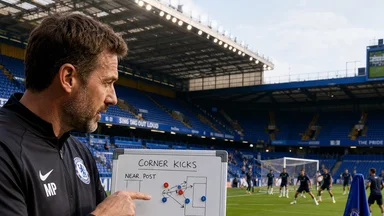
Coaches and players are already adjusting their strategies based on the new technology. Defenders may hold a higher defensive line, knowing that offside calls will be near-instant and accurate, reducing the risk of a delayed flag that allows a goal to stand. Conversely, forwards may time their runs more precisely to exploit the tighter margins, knowing that even a millimeter advantage could be caught. Some teams are incorporating ball-tracking data into their set-piece routines. For example, a corner kick delivery can be timed to coincide with a run that the ball-tracking chip will flag as onside, but only if the passer releases the ball at the exact moment the runner starts moving. Coaches now receive real-time VAR data on tablets on the bench, allowing them to see the offside line immediately after a decision.
The system also affects substitution timing. Managers may delay a substitution if they anticipate a VAR review that could result in a goal or a penalty, since the review period counts as added time. Similarly, players are more careful about celebrating a goal before the VAR confirmation, a lesson learned from several disallowed goals in 2022. However, the technology is not a cure-all. The data on counter-attack efficiency from 2002 versus 2026 suggests that the faster offside calls may actually encourage more aggressive attacking play, since defenders cannot rely on a delayed flag to bail them out.
Stadium infrastructure upgrades required for new system
Every venue hosting a 2026 World Cup match must install 12 Hawk-Eye cameras under the roof, positioned to cover the entire pitch without blind spots. The cameras are connected to a dedicated server room with latency of 10 milliseconds or less, ensuring that the positional data is processed in real time. FIFA also mandates a backup power supply for all VAR equipment, including the cameras and the ball-tracking receiver. The replay screens used by the pitchside monitor must be upgraded to 4K resolution with a 120 Hz refresh rate, so that referees can see the slow-motion replays without motion blur. This is especially important for subjective calls like handball, where the exact position of the arm relative to the body needs to be clear.
Some older stadiums, particularly in the United States, Canada, and Mexico, have had to retrofit their roofs to support the camera mounts. The additional weight and cabling have required structural assessments, and a few venues have opted to install temporary scaffolding instead of permanent mounts. FIFA's technical team has been conducting site visits since early 2025 to ensure compliance. The cost of these upgrades is borne largely by the host nations, though FIFA provides a subsidy for the core VAR equipment. Estimates for the total infrastructure investment across all 16 venues range from roughly US$ 8–12 million per stadium, depending on the existing facilities. That figure does not include the recurring cost of operating the system during the tournament, which FIFA covers through its broadcast revenue. For example, the Rose Bowl in Pasadena required a structural reinforcement of its roof to support the additional camera weight, costing approximately $2 million alone. Similarly, Estadio Azteca in Mexico City had to upgrade its electrical system to handle the increased power demand of the high-speed cameras and servers, adding another $1.5 million to its renovation budget.
Trade-offs and counter-arguments: Over-reliance on technology
While the new technology promises greater accuracy and speed, it also raises concerns about over-reliance on automated systems. Some former referees and players argue that the game is becoming too clinical, with human judgment being replaced by algorithms. For instance, the 2022 World Cup saw a moment where a goal by Japan against Spain was allowed after a millimeter offside call that was barely visible to the naked eye. Critics claim that such marginal calls, while technically correct, undermine the spirit of the game. Additionally, there is a risk that teams will focus too much on exploiting the system's nuances rather than playing natural football. The constant monitoring could also lead to more stoppages for reviews, even if they are shorter, potentially disrupting the rhythm of the game. FIFA has acknowledged these concerns and emphasizes that the human VAR official remains the final decision-maker, but the balance between technology and tradition will continue to be debated.
New controversies on the horizon
The precision of ball-tracking and SAOT may also introduce new types of controversies. For example, if the ball-tracking chip fails to detect the exact kick point due to interference or a malfunction, the system could produce an incorrect offside line. While the chip is designed to be robust, no technology is infallible. Another potential issue is the interpretation of the handball rule, even with the clarified wording. The “unnatural silhouette” standard still requires subjective judgment, and different referees may apply it inconsistently. In the 2024 European Championship, a similar handball standard led to several penalty decisions that were hotly debated. Furthermore, the silent wristwatch notification could cause confusion if a referee does not feel the buzz or misinterprets it, leading to a delayed response. These potential pitfalls highlight that while technology can reduce certain errors, it cannot eliminate all ambiguity from the game.
What remains to be seen is whether the 2026 World Cup will be remembered as the tournament where technology finally got it right, or as another chapter in the ongoing tension between human officiating and automated precision.