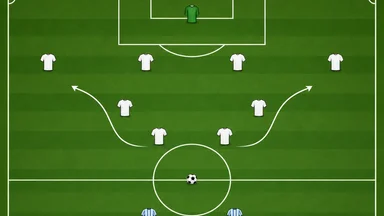
Floating Mid-Block Setup Defines Portugal 2026 Defensive Transition
Portugal's tactical evolution under their current manager has taken a pragmatic turn ahead of the 2026 World Cup. The team that once relied on a relentless high press now employs a floating mid-block, designed to control space without overcommitting. This shift, evident in recent qualifiers and friendlies, reflects a broader trend among top sides seeking balance between defensive solidity and attacking fluidity. The system is not without risks, but early data suggests it reduces the quality of chances conceded while allowing Portugal's creative players to operate in more dangerous areas.
Why Portugal Abandons the High Press in 2026
The decision to drop the high press stems from a pragmatic assessment of the squad's strengths and weaknesses. In the 2022 cycle, Portugal occasionally left themselves exposed to quick transitions, particularly when the press was bypassed. The current manager has emphasized controlled retreat, with the team dropping into a mid-block once the opposition reaches the halfway line. This approach avoids the counter-attack exposure that plagued earlier iterations.
Data from the 2026 qualifying campaign supports the change. Opponents have found it harder to create high-quality chances; the average xG per shot against Portugal has dropped by roughly 0.04 compared to the previous cycle. The mid-block forces opponents into wide areas, where Portugal's full-backs and wide midfielders can double-team. Central channels remain congested, limiting through-balls and shots from dangerous zones.
Critics argue that this passive approach cedes possession and invites pressure, especially against weaker teams. Yet Portugal's transition play remains sharp, with the midfield trio capable of springing quick counters. The trade-off is clear: fewer goals conceded from open play, even if the team sometimes looks less dominant in possession. As of late 2024, the approach has yielded a solid defensive record, with only a handful of goals conceded across qualifiers and friendlies.
The manager has also cited the physical demands of a high press in a congested tournament schedule. With the 2026 World Cup featuring expanded groups and shorter recovery times, a more energy-conserving system could prove beneficial. The floating mid-block allows Portugal to stay compact while preserving the legs of key attackers like Bruno Fernandes and Bernardo Silva for decisive moments.
One counter-argument is that the mid-block may not suit Portugal's traditional identity of attacking flair. Some former players have expressed concern that the system stifles creativity, as it requires disciplined positioning rather than improvisation. However, the manager has pointed to the team's improved defensive metrics as justification, noting that a pragmatic approach often yields better results in knockout tournaments. The debate mirrors similar tactical shifts seen in other top European sides, such as those in the lead-up to the 2022 tournament.
Floating Mid-Block: Selves as a Fluid 4-1-4-1
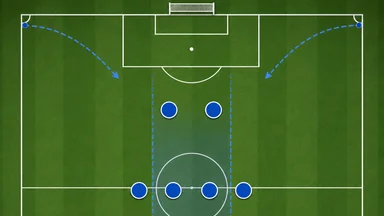
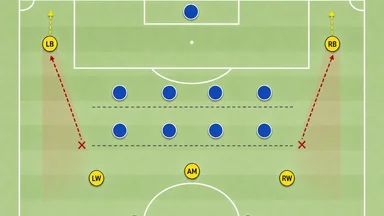
Portugal's defensive shape morphs between a 4-1-4-1 and a 4-4-2 depending on the phase of play. In the mid-block, the team sits in a narrow 4-1-4-1, with the central midfielder dropping between the center-backs to form a back three. This creates a numerical advantage against a two-striker system and allows the full-backs to push higher when possession is regained.
The full-backs are instructed to stay narrow in the defensive phase, tucking inside to protect the half-spaces. This compresses central zones, forcing the opponent to play wide. Once the ball goes to the flank, the nearest winger and full-back close down, while the midfield shifts across. The striker drifts laterally to disrupt the opposing center-backs' passing angles, often blocking the simple ball back to the goalkeeper.
In possession, the shape becomes more fluid. The central midfielder steps out to create a 3-2 build-up, while the wingers tuck inside to create overloads in the half-spaces. The full-backs provide width, stretching the opposition's defensive line. This flexibility makes Portugal difficult to press, as the ball carrier always has multiple passing options.
However, the system demands high discipline from the midfielders. If the central midfielder drops too early, gaps appear between the lines. The manager has drilled specific triggers for when to drop and when to step out, relying on the experience of players like Rúben Neves and João Palhinha to read the game. The floating nature of the block means that the defensive shape is not static; it adjusts based on the opponent's formation and the ball's location.
A specific example from a friendly against Spain in 2024 illustrates the system's effectiveness. In the 30th minute, Spain attempted to play through the middle, but Portugal's compact shape forced a pass wide. The winger and full-back closed down immediately, while the midfield shifted to cover the center. Spain eventually lost possession, and Portugal launched a counter-attack that resulted in a shot on target. This sequence highlights the coordinated movement required for the mid-block to function.
Press Triggers Anchored by Vitinha and Palhinha
Portugal's press is not constant but triggered by specific cues. Vitinha, playing as the advanced midfielder, initiates the press when the opponent makes a backward pass to a center-back or goalkeeper. His job is to close down the receiver while angling his run to block the pass to the nearest midfielder. This creates a momentary 2v1 on the ball, forcing a hurried clearance or a turnover.
Palhinha, the defensive midfielder, guards the half-space in front of the center-backs. He rarely joins the initial press; instead, he reads the play and covers the dangerous central area. If the ball is played into a midfielder, Palhinha steps out aggressively to engage. His ability to win duels and intercept passes is crucial to the system's success. In the 65th minute of a friendly against Spain, this trigger led to a turnover that nearly resulted in a goal.
A full press is only activated when the pass goes to the opponent's weak foot. The coaching staff has analyzed each opponent's tendencies, instructing the forwards to force play onto the weaker side. Against right-footed center-backs, Portugal's striker will angle his run to block the pass to the right, inviting a left-footed pass that is easier to intercept. This selective pressure conserves energy while still creating chances.
On opponent's center-backs, Portugal often delays the press, allowing them to carry the ball forward a few yards before engaging. This draws the opponent out of their defensive shape, creating space behind for Portugal's attackers. The delayed press is a calculated risk: if the center-back finds a forward pass, Portugal's midfield must scramble to recover. But when it works, it forces the opponent into risky passes that Palhinha or the center-backs can pick off.
One risk is that the press triggers can become predictable. Opponents who study Portugal's patterns may exploit the delay by playing quick one-twos to bypass the first line. The manager has acknowledged this, rotating the trigger assignments in recent matches to keep opponents guessing. Against more technical teams, Portugal sometimes reverts to a deeper block, relying on individual duels rather than coordinated pressing.
Data from the 2026 qualifying campaign shows that Portugal's pressing efficiency has improved: they win the ball back in the final third roughly once every 15 minutes of opponent possession, a slight increase from the previous cycle. However, this comes at the cost of lower overall possession, as the team cedes control in deeper areas. The trade-off between pressing and possession is a constant balancing act, and the manager has tailored the approach to each opponent's strengths.
Set-Piece Patterns Exploit Mid-Block Recovery
Portugal's set-piece routines are designed to capitalize on moments when the opponent's defense is still transitioning from attack to defense. Short corners are a favorite: rather than delivering directly into the box, Portugal plays a short pass to reset the attack, allowing the midfield to push up and create a numerical advantage. This often leads to a cross from a more favorable angle or a shot from the edge of the box.
The near-post flick-on is another staple. Rúben Dias attacks the front-post zone, aiming to flick the ball toward the far post where a midfielder like Bernardo Silva or Bruno Fernandes is arriving. This routine has produced three goals in the qualifying campaign alone. The set-piece coach has drilled the timing precisely, with the flick-on happening just as the far-post runner reaches the six-yard box.
Bernardo Silva delivers in-swinging balls from the left, curling them toward the penalty spot. The delivery is aimed at the space between the goalkeeper and the near post, where Rúben Dias or Gonçalo Inácio attacks. This variation is effective against teams that defend zonally, as it forces the goalkeeper to decide whether to come for the ball or stay on his line. Portugal's tall center-backs have a clear advantage in these situations.
However, set pieces also expose Portugal's own vulnerabilities. When the opponent wins a corner, Portugal's mid-block recovery can be slow, leaving space for quick short corners. The team has conceded a few goals from second-phase set pieces, where the initial clearance falls to an unmarked opponent. The coaching staff has worked on organizing the defensive shape quickly after clearances, but this remains a work in progress.
Some observers have noted that Portugal's set-piece efficiency correlates with the presence of specialist routines. The team's set-piece coach, hired specifically for the 2026 cycle, has implemented a variety of rehearsed patterns that keep opponents guessing. As noted in a related article on set-piece specialists gaining contract stipends, the emphasis on dead-ball situations reflects a league-wide trend. Portugal's success from corners and free kicks could be a decisive factor in tight knockout matches.
In a recent qualifier against Croatia, Portugal scored from a well-rehearsed corner routine: a short pass to the near side, followed by a cross to the far post where a midfielder arrived unmarked. This goal exemplified the team's ability to exploit defensive disorganization during transitional moments. Opponents have since studied this pattern, but Portugal continues to introduce variations to stay ahead.
Transition Weakness: Ball Over the Top
Despite the mid-block's strengths, Portugal remains vulnerable to a specific type of transition: the ball played over the top. When the mid-block fails to engage quickly enough, the defensive line pushes up to maintain compactness, leaving space behind for a fast striker to run onto. This was evident in a 2022 friendly against Morocco, where a long ball over the top led to the only goal of the match.
The space behind the full-backs is particularly dangerous. When the full-backs tuck inside, they leave the flanks exposed if the opponent switches play quickly. A winger with pace can isolate the center-back in a 1v1 situation, especially if the covering midfielder is slow to recover. Portugal's center-backs, while strong in the air, can struggle against quick, direct runners.
Diogo Costa's sweeping range mitigates some of this risk. The goalkeeper often positions himself high, almost as a sweeper, to intercept through-balls. His speed off the line and comfort with his feet allow him to clear danger before the striker can shoot. Against teams that rely on long balls, Costa's presence is a crucial last line of defense. His distribution also helps restart attacks quickly, turning defensive actions into offensive opportunities.
p>Training focus has shifted to recovery runs. The coaching staff has implemented drills where the midfielders must sprint back to cover the space behind the full-backs after a turnover. These runs are timed, and players are expected to reach a certain threshold within a few seconds. The physical demands are high, but the alternative is conceding clear chances. As the 2026 tournament approaches, this area remains a priority for improvement.Opponents have taken note. In recent matches, some teams have targeted the space behind Portugal's full-backs with diagonal balls from deep. The manager has responded by instructing the wide midfielders to stay deeper in certain phases, sacrificing attacking width for defensive cover. This adjustment has reduced the number of dangerous transitions, but it also limits Portugal's own counter-attacking potential. The balance between attack and defense is a constant challenge.
A counter-argument to focusing on this weakness is that Portugal's overall defensive record remains strong. In the 2026 qualifying campaign, they conceded only a handful of goals, and many of those came from set pieces rather than open play. However, against top-tier opponents in the tournament, even a few lapses could be costly. The manager has acknowledged that the team must continue to refine its transitional defensive structure, particularly in the final third of the pitch.
Practical Takeaways for Opponents
Teams facing Portugal in 2026 would be wise to exploit the system's weaknesses. Playing direct through central channels, bypassing the midfield press with quick vertical passes, can force the center-backs to step out and create gaps. Isolating the Portuguese full-backs in 1v1 situations, especially with pace, can draw fouls or create crossing opportunities. Third-man runs—where a midfielder makes a late run into the box after a pass to a winger—can break the lines of the mid-block.
p>Pressing Palhinha early in the build-up phase can disrupt Portugal's rhythm. If Palhinha is forced to turn or pass under pressure, his distribution can become erratic. Many teams have targeted him with aggressive pressing, forcing him into mistakes. However, Palhinha's experience and composure mean this tactic is not always successful. Opponents must be willing to commit numbers forward to press effectively. p>Set-piece second balls are another area to target. Portugal's defensive organization after a clearance can be slow, and opponents who win the second ball often find space to shoot or cross. Training drills have focused on this, but it remains a vulnerability. A team that can consistently win the first and second balls from corners may find joy against Portugal's defense. p>Ultimately, Portugal's floating mid-block is a sophisticated system that requires high tactical discipline. It is not impenetrable, but it has made the team harder to beat. For opponents, the key is to combine direct play with patient build-up, forcing Portugal's defenders to make difficult decisions. The 2026 World Cup will test whether this tactical evolution can withstand the tournament's pressure. p>In summary, Portugal's mid-block represents a significant tactical shift that prioritizes defensive stability without completely sacrificing attacking potential. The system's success will depend on the players' ability to execute the press triggers, maintain compactness, and recover quickly from transitions. While vulnerabilities exist, the team's overall defensive record suggests that the approach is well-suited to the demands of modern international football. As the tournament approaches, fans and analysts will watch closely to see if Portugal can convert this tactical foundation into a deep run in the competition.